Snagging World Cup Vancouver Tickets Like a Pro
Let’s be totally upfront—if you are frantically searching for world cup vancouver tickets right now, you already know the competition is absolutely brutal. I was on a video call just yesterday with a fellow Ukrainian expat who lives a few blocks from BC Place, and we spent a solid two hours trying to decode the official portal’s waiting room logic. We both completely missed out on the first drop. It is a massive learning curve, and getting these passes requires speed, sharp strategy, and knowing exactly how the system works behind the scenes. Now that we are officially in the madness of 2026, the energy across the city is electric, but that excitement brings unprecedented demand.
You cannot just wake up, casually sip your morning coffee, log into the website, and expect to check out with four lower-bowl seats. The entire globe is competing for a spot in that specific stadium. My friend from Kyiv managed to secure a pair only because he treated the ticket drop like a high-stakes military operation. Your approach needs to be equally aggressive. You need to understand the payment gateways, the digital queue algorithms, and the seating charts inside and out. This guide is your blueprint. I am going to walk you through exactly what you need to do, day by day, to make sure you are sitting in those stands when the referee blows the starting whistle.
Navigating Categories, Costs, and Core Strategies
Understanding the stadium layout and the financial commitment is your first real hurdle. The official ticketing portal divides everything into strict categories, and your strategy completely shifts depending on which tier you are targeting. You need a solid value proposition in mind before the portal even opens. For example, if you are bringing your whole family, aiming for Category 3 gives you the best statistical chance of grabbing contiguous seats without destroying your bank account. On the flip side, if this is your once-in-a-lifetime trip and you want to see the players’ expressions, going straight for Category 1 requires a different financial clearance from your bank.
Here is a breakdown of what you are actually dealing with when you finally get through the digital queue:
| Ticket Category | Estimated Price Range | Best Suited For |
|---|---|---|
| Category 1 (Premium) | $450 – $900+ | Die-hard fans wanting optimal, lower-tier sideline views. |
| Category 2 (Mid-Tier) | $250 – $449 | Groups wanting a great atmosphere without the maximum price tag. |
| Category 3 (Upper/Ends) | $100 – $249 | Budget-conscious attendees focused purely on being inside the building. |
To really maximize your chances, you have to prep your digital footprint. Here are the three non-negotiable steps you must take before any ticket drop:
- Pre-authorize your credit cards: Call your bank and explicitly tell them you will be making a large international purchase. Fraud algorithms will absolutely block a sudden $1,500 charge to a sports entity, and you will lose your cart.
- Sync your time to the atomic clock: The queue opens at exact milliseconds. If your computer clock is thirty seconds behind the global server time, you are already behind three hundred thousand people.
- Create multiple distinct accounts: Have a trusted family member use a different IP address and a different payment method to double your statistical odds of passing the randomization filter.
Origins of the Global Ticketing Rush
To understand why getting into BC Place is so intensely difficult, we have to look back at how mega-event ticketing started. Decades ago, securing a spot at a massive international tournament meant physically mailing a check and a paper application to a governing body, then waiting weeks for a physical piece of cardboard to arrive in your mailbox. The sheer friction of this physical process naturally limited how many people could apply at once. You were mostly competing with locals or highly dedicated international travelers who planned years in advance.
Evolution to the Digital Pass
As the internet took over, the physical paper trail transitioned into digital queues. The late 2000s and 2010s saw the rise of the first-come, first-served digital portals. However, this era was completely plagued by brute-force server attacks. Automated bots could purchase thousands of seats in a matter of seconds, leaving genuine fans entirely locked out. The governing bodies had to fight back, which led to the implementation of randomized waiting rooms and complex lottery systems. It was no longer just about clicking fast; it was about passing digital verification checks and hoping the random number generator favored your session ID.
The Modern State of Stadium Access
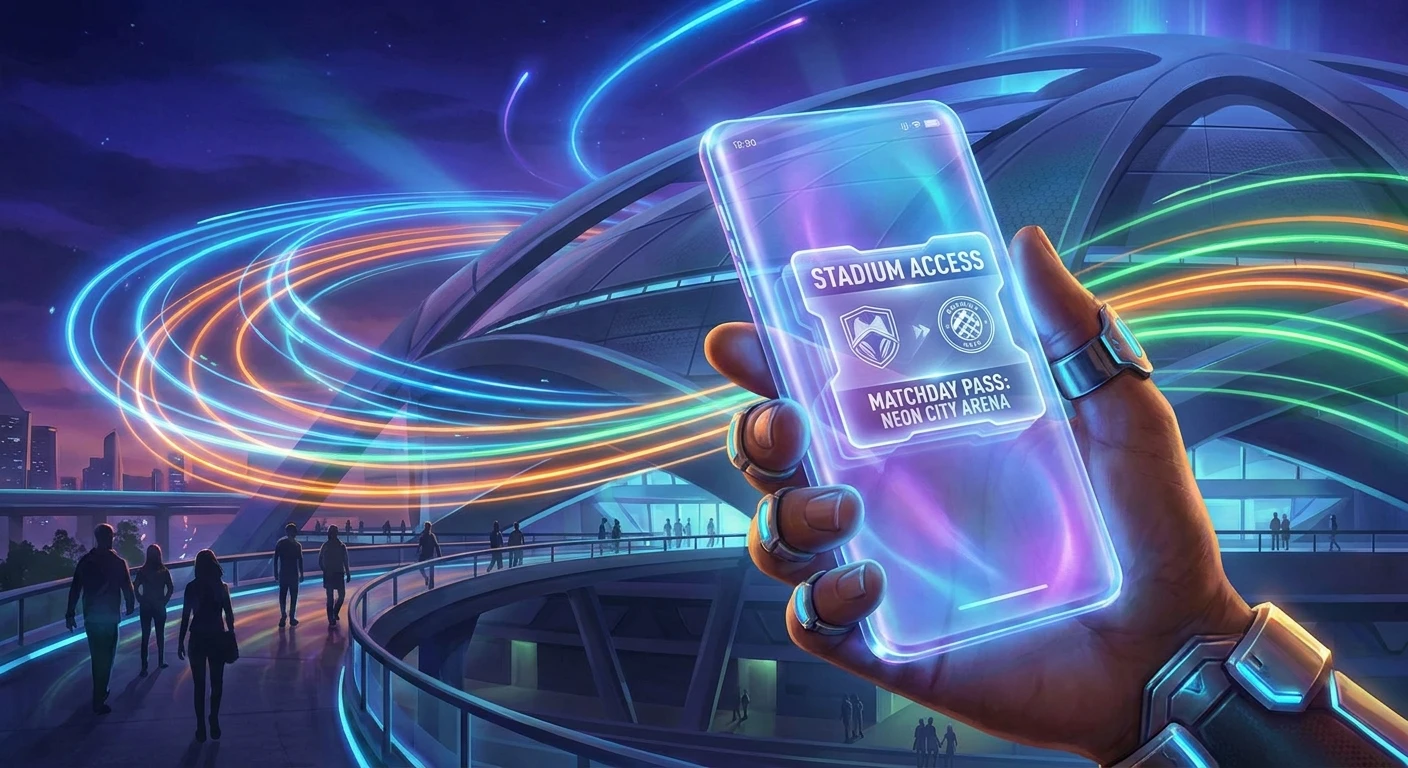
Fast forward to right now, and the landscape is an absolute fortress of digital security. Paper tickets are completely dead. Everything is tied to a secure mobile application locked to your specific smartphone hardware. The organizers use dynamic barcodes that refresh every few seconds to prevent people from screenshotting their passes and selling duplicates. The modern system is designed specifically to kill the black market, which is great for fairness, but it means you, the buyer, have to navigate a highly complex technical ecosystem just to prove you are a real human trying to watch a game.
The Science of the Digital Queue
Getting through the waiting room is not magic; it is pure computer science. When you stare at that spinning circle on your screen, you are interacting with incredibly advanced load-balancing technology.
The Load Balancing Algorithm
When millions of connections hit the server simultaneously, the architecture uses a system called “virtual waiting rooms.” This is not a strict linear line like a grocery store. The server dumps everyone who arrives before the launch time into a giant holding pen. At the exact launch moment, an algorithm assigns a cryptographic token to every user, completely randomizing their order. Showing up three hours early does not give you priority over someone who showed up three minutes early. The load balancer then slowly trickles users into the actual purchasing environment based on real-time server capacity, ensuring the payment gateways never crash.
NFC Security and Hardware Locking
Once you actually buy the seat, the delivery mechanism relies on Near Field Communication (NFC) and hardware-bound encryption. Your pass is not a PDF. It is an encrypted payload stored in your phone’s secure enclave.
Here are the technical realities of your digital pass:
- Dynamic Barcoding: The QR code on your screen regenerates every 15 seconds, making screenshots mathematically useless at the security gate.
- Hardware Binding: The ticket is tied to your phone’s unique device identifier (IMEI/MAC). You cannot easily log into your account on a friend’s phone without triggering an intense multi-factor authentication protocol.
- Bluetooth Beacons: Stadiums now use proximity beacons that communicate with your ticketing app to activate the barcode only when you are physically within 500 meters of the gates.
- Offline Authentication: The encryption keys are downloaded to your device beforehand, meaning the ticket will still scan perfectly even if cellular networks crash due to crowd density.
Your 7-Day Strategy Playbook
You cannot just wing this. If you want to win, you need a strict, actionable plan leading up to the release date. Follow this exact seven-day countdown protocol to maximize your success.
Day 1: Official Account Auditing
Log into the official portal and completely audit your profile. Ensure your name matches your government ID exactly. Update your shipping address, even though the passes are digital, because the payment gateway requires a precise zip code match for fraud prevention. Delete any old credit cards saved on the profile.
Day 2: Payment Gateway Optimization
Contact your bank’s fraud department. Do not just speak to a regular teller; specifically ask for the fraud monitoring team. Give them the exact date, the expected merchant name, and the maximum dollar amount you plan to spend. Ask them to put a temporary bypass on international digital purchases for that specific 24-hour window.
Day 3: Network Speed Calibration
Test your internet connection. You want the lowest possible ping, not just high download speeds. Plug your computer directly into your router using an Ethernet cable. Wi-Fi introduces micro-stutters and packet loss that can cause your connection to drop for a split second—which is enough to kick you out of the virtual waiting room.
Day 4: Seating Matrix Memorization
Study the BC Place stadium map until you have it memorized. When you get through the queue, you will only have about five minutes to make a selection. You do not have time to debate whether section 214 is better than section 215. Know your first, second, and third choice sections instantly.
Day 5: Secondary Device Setup
Prepare a backup plan. Set up a completely different device, like an iPad, connected to a cellular data hotspot rather than your home internet. This gives you a secondary IP address. Log into a completely different account registered to a family member. Never use multiple tabs on the same browser; the site’s cookies will flag you as a bot.
Day 6: The Waiting Room Strategy
On the eve of the drop, double-check all your login credentials. When the waiting room opens (usually 30 to 60 minutes before the sale), enter it exactly once on each device. Do not refresh the page. I repeat, do not hit F5. The page uses JavaScript to automatically refresh and push you through when it is your turn.
Day 7: The Verified Resale Contingency
If you strike out completely on the primary drop, do not panic. Pivot immediately to the official verified resale platform. Many people buy blocks of seats and immediately list the ones they do not need. Keep the official resale page open and monitor it aggressively over the next few weeks. Stick strictly to the official platform to avoid catastrophic scams.
Separating Myth from Reality
There is so much terrible advice floating around on social media right now. Let’s clear the air.
Myth: Hitting refresh repeatedly while in the queue pushes you forward in line.
Reality: Hitting refresh destroys your current session ID. The server registers you as a brand new user and kicks you to the absolute back of the virtual line. Trust the auto-refresh.
Myth: Using an incognito window helps you bypass the ticket limit.
Reality: The system tracks your IP address, your browser fingerprint, and your payment method. Incognito mode hides your history from yourself, not from a multi-million-dollar anti-bot firewall.
Myth: Buying a physical printed pass from someone outside the stadium is a good backup plan.
Reality: There are zero physical passes for this tournament. If someone hands you a piece of cardboard or paper, it is a 100% guaranteed counterfeit. Do not hand them your money.
Frequently Asked Questions & Wrap Up
Are the digital passes transferable?
Yes, but usually only through the official app. You will need the recipient’s email address, and they must download the app to accept the transfer.
Can I buy access at the stadium gate on match day?
Absolutely not. There are no physical box offices selling inventory on the day of the event. Everything is pre-sold digitally.
What happens if the official app crashes at the gate?
The system uses offline NFC technology. As long as you logged in and downloaded the pass to your phone’s wallet beforehand, it will scan without an active internet connection.
Do toddlers or infants need their own seat?
Yes. Regardless of age, every single human entering the security perimeter must have a registered barcode tied to their identity.
How does the official resale market work?
If you cannot attend, you can list your seat on the official portal. The buyer pays face value (plus admin fees), and a new barcode is securely generated for them while yours is deactivated.
What is included in a hospitality package?
These are VIP tiers that include premium seating, catered food, private lounges, and sometimes dedicated parking, but they cost significantly more than standard categories.
Can I pay with cryptocurrency?
Currently, the official primary gateways only accept major fiat credit and debit cards. Crypto is not directly integrated into the checkout flow.
Is there a strict limit on how many I can buy?
Yes, usually capped at a specific number (e.g., four or six) per household/account to prevent mass scalping.
Getting your hands on these passes is undoubtedly a grind, but the atmosphere waiting for you inside the stadium makes every ounce of stress worth it. Follow the technical strategies, prepare your hardware, and trust the process. If you are serious about being part of the action this year, bookmark the official portal right now and start getting your accounts completely dialed in. Don’t let a missing zip code keep you from experiencing sports history!