The Masterpiece Known As Rolls-Royce La Rose Noire Droptail
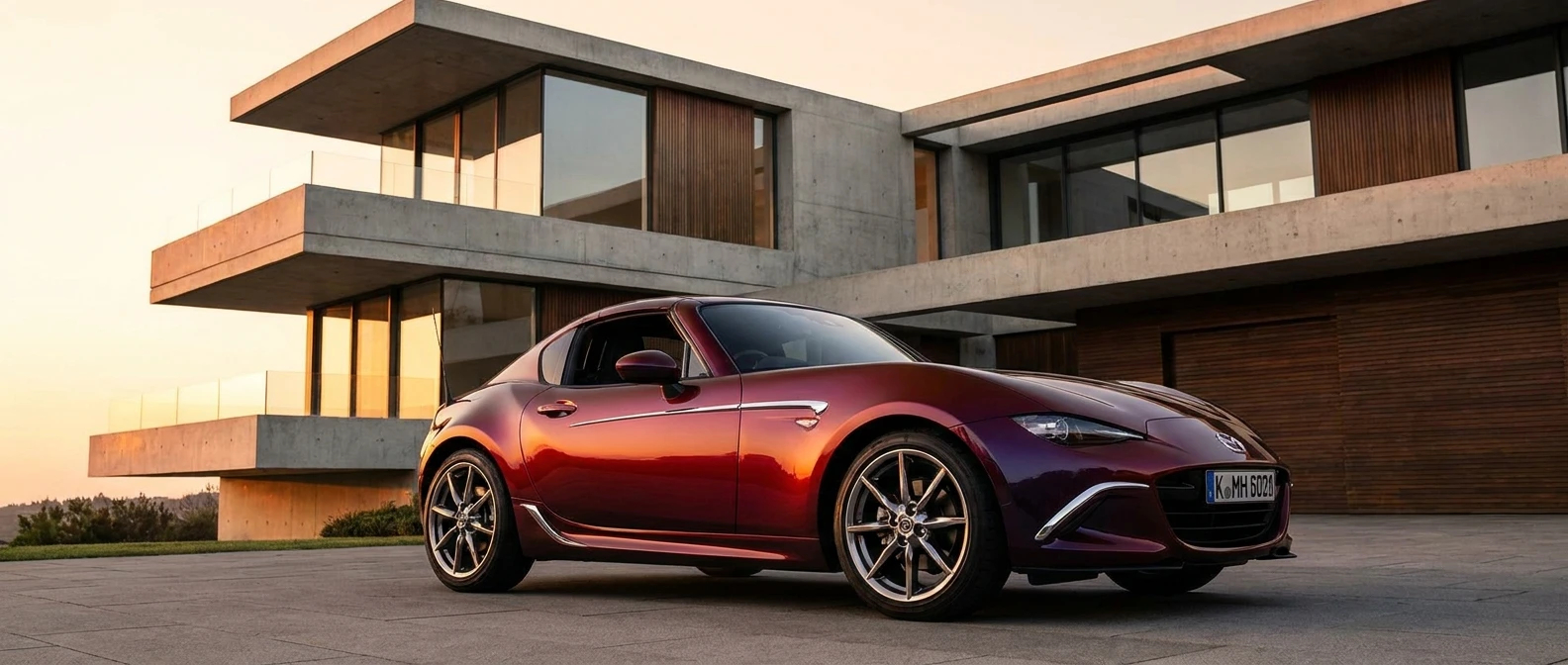
When you look at the absolute pinnacle of automotive excellence, the Rolls-Royce La Rose Noire Droptail stands entirely apart as a singular achievement in bespoke engineering and artistic design. You are not just looking at a mode of transportation; you are observing a rolling piece of high-art, meticulously crafted over four years for a single, highly discerning patron. The focus here is a profound shift from traditional luxury manufacturing to pure, unadulterated coachbuilding. Inspired by the deep, velvety richness of the Black Baccara rose, this two-seat roadster captures the essence of romance, exclusivity, and mechanical perfection. The fundamental thesis of this vehicle is simple: true luxury means zero compromises, where every single millimeter of the car is dictated by a personal narrative rather than a corporate spreadsheet. The Rolls-Royce La Rose Noire Droptail represents the very first of only four unique Droptail commissions, setting an astonishing benchmark for what is scientifically and creatively possible inside the legendary Goodwood manufacturing facility. By blending high-end horology, unprecedented woodworking techniques, and a completely unique chassis architecture, this vehicle proves that the golden age of automotive coachbuilding is not just a distant memory from the roaring twenties, but a vibrant, living reality right now.
Understanding the Ultimate Value Proposition
Why does a vehicle like this exist, and what does it actually provide to the patron who commissions it? You have to understand that the standard luxury market, even at the highest echelons, still relies on shared platforms and catalog options. The coachbuild paradigm obliterates these limitations. The value proposition of a bespoke commission lies in total creative freedom and the creation of an asset that functions as both a functional hyper-luxury vehicle and an irreplaceable historical artifact. Consider two prime examples of this value. First, the integration of a custom, removable 43mm Audemars Piguet Royal Oak Concept chronograph directly into the dashboard. This is not just a clock; it is a mechanical synergy between two of the most prestigious luxury houses in the world, mounted on a mechanized clasp that allows the owner to wear the timepiece at their destination. Second, the exterior paint process. Achieving the precise, color-shifting dark red of the Black Baccara rose required over one hundred and fifty separate iterations, blending a secret base coat with five layers of clear lacquer mixed with specific red tones to create a shade named True Love. This level of dedication is simply impossible in mass production.
Read also: Understanding The Apollo Evo Price And Specs; Aston Martin Valhalla Price: Complete Hybrid Supercar Guide.
| Feature Category | Standard Luxury Automotive | The Droptail Paradigm |
|---|---|---|
| Production Volume | Thousands of units per year globally | Strictly limited to a one-of-one commission |
| Material Sourcing | Premium grade but standardized catalogs | Custom-grown, hand-placed unique veneers |
| Chassis Architecture | Shared modular corporate platforms | Dedicated monocoque structure for this specific model |
The benefits of participating in this level of bespoke creation are numerous and distinct:
- Absolute Creative Sovereignty: The client acts as a co-designer, dictating every narrative element from the specific wood grain to the bespoke champagne chest integrated into the rear deck.
- Unprecedented Material Innovation: The engineering team develops entirely new techniques, such as specific paint chemistries and wood treatments, that have never been attempted in automotive history.
- Asset Appreciation and Automotive Legacy: A completely unique, factory-supported coachbuilt vehicle instantly becomes a highly coveted artifact, securing its place in the timeline of automotive history and often appreciating exponentially as a cultural icon.
Origins of Rolls-Royce Coachbuilding
To fully appreciate the gravity of this roadster, we need to trace the origins of the Coachbuild department. Back in the 1920s and 1930s, acquiring a luxury vehicle was a vastly different process. A patron would purchase a rolling chassis—complete with the engine, transmission, and suspension—directly from the manufacturer. They would then contract a separate, highly skilled coachbuilder, such as Park Ward, Hooper, or H.J. Mulliner, to design and construct the body and interior exactly to their personal tastes. This method produced some of the most striking and famous classic cars in existence, but the practice largely died out after the Second World War as unibody construction and mass production took over the industry.
Evolution of the Droptail Concept
The modern era saw a dramatic return to these bespoke roots. The revival formally began in 2017 with the introduction of the Sweptail, a magnificent two-door grand tourer that shocked the industry by proving there was an active, viable market for multi-million-dollar, one-off commissions. This was followed in 2021 by the Boat Tail, an open-air, nautical-themed masterpiece that pushed the boundaries of outdoor hosting with its intricate rear hosting suite. However, those vehicles were grand four-seaters. The Droptail represents a significant evolution in philosophy. It is the brand’s first true two-seat roadster in modern history, focusing entirely on an intimate, driver-centric experience. The proportions are tighter, the stance is more aggressive, and the overall narrative is far more personal, moving away from grand entertaining to a romantic, isolated journey for two.
Modern State of Bespoke Commissions
In the current state of operations at Goodwood, the Coachbuild department operates as an entirely distinct entity from the main production lines. It is a highly secretive, deeply integrated division where invited clients spend years collaborating closely with the brand’s lead designers and engineers. The process is not about selecting options from a screen; it is about bringing abstract concepts, memories, and personal passions into physical reality. The creation of a vehicle in this department requires developing entirely new homologation standards, as the custom bodywork must still pass rigorous global safety and aerodynamic testing, proving that these are not mere sculptures, but highly capable grand touring machines.
The Parquetry Engineering Marvel
Looking under the sculpted hood and beneath the intricate wood, the scientific and technical realities of this vehicle are staggering. The absolute centerpiece of the interior is the complex wooden parquetry, a feature that took a single craftsperson nine months of uninterrupted labor to complete. The design requires exactly 1,603 individual pieces of Black Sycamore wood veneer. These pieces are meticulously hand-cut, sanded, and placed to represent falling rose petals in a highly asymmetrical, organic pattern. From an engineering standpoint, this wood is not simply glued to a flat surface. It is mathematically plotted over the sweeping, three-dimensional curves of the dashboard and the rear shawl panel, requiring exact calculations to account for structural flexing, humidity changes, and temperature variations without cracking or warping over decades of use.
Aerodynamics and Structural Rigidity
Moving beyond the aesthetics, the very skeleton of this roadster is a scientific feat. Unlike previous modern coachbuilt models that utilized the existing Architecture of Luxury platform found in the Phantom, this vehicle demanded an entirely new approach. Because it is a two-seat roadster with a large rear deck, it required a bespoke monocoque constructed from a hybrid of aluminum, steel, and carbon fiber. This unique tub provides the massive structural rigidity needed for a roofless car while keeping the weight manageable.
- Bespoke Chassis Construction: An exclusive carbon fiber and aluminum tub designed strictly for the two-seat roadster configuration, ensuring absolute torsional stiffness.
- Powertrain Specifications: A heavily modified version of the 6.75-liter twin-turbocharged V12 engine, meticulously tuned to produce an enhanced 593 horsepower and 620 lb-ft of torque.
- Aerodynamic Rear Deck: The rear section acts as a functional aerodynamic downforce element, precisely shaped in a wind tunnel to manage airflow over the open cabin without the need for an aggressive, protruding spoiler.
- Electrochromic Glass Roof: A removable hardtop featuring an advanced electrochromic glass panel that transitions from completely opaque to near-translucent at the touch of a button, utilizing specialized voltage-sensitive chemical layers.
Step 1: The Initial Private Commission
If you are among the select few invited to commission a vehicle of this magnitude, the process is a multi-year journey. It begins with a strictly private meeting at the Goodwood estate. Here, the patron and the lead designers sit down not with car parts, but with mood boards, personal artifacts, and conceptual ideas. The goal is to find the emotional core of the project.
Step 2: Defining the Core Metaphor
Once the initial meetings conclude, the team locks in the primary metaphor. In this specific case, the patron brought forward the Black Baccara rose, a flower deeply significant to their family. This rose changes its appearance from almost black in the shade to a vibrant, pearlescent red in direct sunlight, providing a highly specific and difficult brief for the chemistry and design teams.
Step 3: Engineering the Bespoke Chassis
With the design locked, the engineering team begins constructing the physical skeleton. Because the dimensions and weight distribution of a two-seat roadster are entirely different from a flagship sedan, a completely custom carbon fiber and aluminum monocoque is fabricated and tested rigorously on digital simulators before a physical prototype is milled.
Step 4: Crafting the Parquetry and Interior
While the chassis is being built, the interior woodshop begins the most arduous phase. A dedicated sound-proof studio is constructed for a single craftsperson, who works for no more than one hour at a time to maintain absolute focus. They hand-place over 1,600 individual geometric pieces of Black Sycamore veneer, creating the sweeping rose petal design across the entire rear shawl and dashboard.
Step 5: Developing the Exterior Paint Chemistry
Simultaneously, the paint specialists undergo a grueling process of chemical engineering. They develop over 150 different mixtures, combining various base layers, metallic flakes, and clear coats to replicate the exact light-shifting properties of the Black Baccara rose. The final result is a complex, multi-layered application that requires precise temperature control during curing.
Step 6: Integrating High-End Horology
Next comes the intricate collaboration with external luxury houses. The dashboard is engineered with a specialized, mechanized clasp designed specifically to securely hold a custom Audemars Piguet chronograph. This mechanism must be crash-tested to ensure the heavy timepiece does not become a hazard during an accident, while still allowing the owner to easily remove and wear it.
Step 7: The Final Global Delivery
After more than four years of development, the finished vehicle is transported under heavy security to a location of the owner’s choosing for the final presentation. For this specific roadster, the presentation took place at a private estate during the Pebble Beach automotive week, surrounded by close friends and the core design team who brought the vision to life.
Myths and Reality of the Coachbuild Process
Myth: The Droptail is just a customized Phantom with a different body swapped onto the same frame. Reality: It utilizes a completely bespoke monocoque chassis made from carbon fiber, steel, and aluminum, engineered exclusively for the two-seat roadster layout. Myth: Anyone with endless funds can simply walk in and commission a one-off Coachbuild car. Reality: The manufacturer carefully selects and invites specific clients based on their long-standing relationship with the brand and their deep understanding of automotive artistry. Myth: The wooden parquetry is printed, laser-etched, or machine-assembled on an industrial scale. Reality: Every single one of the 1,603 geometric wood pieces was hand-cut, manually sanded, and individually glued by one dedicated artisan over nine months. Myth: These highly expensive cars are totally fragile, meant only to sit in climate-controlled museums and are never actually driven. Reality: They are fully homologated, street-legal vehicles engineered with robust V12 engines and advanced suspensions to deliver a flawless grand touring experience on open roads.
How much does the Rolls-Royce La Rose Noire Droptail cost?
While official figures are never publicly disclosed by the manufacturer out of respect for the client, industry estimates place the cost of a bespoke Droptail commission well above thirty million dollars, making it one of the most valuable new cars ever constructed.
Who owns the first Droptail?
The identities of Coachbuild clients are kept strictly confidential by the brand. It is known only that this specific vehicle was commissioned by a highly prominent, international husband-and-wife team with a deep passion for art and haute horlogerie.
How many Droptails will be built?
The manufacturing run is strictly limited to exactly four iterations. While each of the four will share the same fundamental two-seat roadster body style, their individual designs, materials, inspirations, and engineering specifics will be entirely unique to their respective owners.
What is the top speed of this vehicle?
Although it is not built for track performance, the heavily tuned 6.75-liter V12 engine allows the roadster to effortlessly reach an electronically limited top speed of 155 miles per hour, prioritizing smooth power delivery over raw aggressive acceleration.
Is the Audemars Piguet watch included in the car?
Yes, the custom-designed 43mm Audemars Piguet Royal Oak Concept Split-Seconds Chronograph GMT Large Date was explicitly commissioned alongside the vehicle and integrates directly into the dashboard via a bespoke mechanized clasp.
What type of wood is used in the cabin?
The intricate parquetry design is crafted almost entirely from Black Sycamore veneer, sourced specifically from France as a subtle nod to the French origins of the Black Baccara rose that inspired the entire vehicle.
Can the roof be removed completely?
Yes, it features a removable hardtop designed to transform the sleek coupe into a striking open-air roadster. The roof itself contains advanced electrochromic glass that can instantly change its opacity at the push of a button.
A Final Note on Automotive Artistry
The creation of this magnificent vehicle proves that the highest levels of bespoke craftsmanship are still thriving in the modern era. It represents an unparalleled dedication to personal storytelling, material science, and mechanical engineering. If you are captivated by the endless possibilities of custom automotive design, we encourage you to follow the ongoing innovations from the world’s premier coachbuilding departments and explore how visionary patrons are continuing to shape the future of ultra-luxury transport.