The Defining Elements of Carmelito Cafe and Artisanal Brewing
Stepping up to the counter at Carmelito Cafe is an experience that redefines exactly what a morning ritual should look like. In a bustling world where convenience often overshadows quality, dedicating time to a meticulously crafted beverage is a small act of rebellion. The focus keyword of today’s coffee culture is precision, and establishments that embrace this philosophy serve as the standard-bearers for the entire hospitality industry. When you order a beverage at a premium establishment, you are not simply purchasing a quick jolt of caffeine; you are participating in a global agricultural supply chain that ends with an expertly calibrated extraction. The thesis is simple: understanding the mechanics, history, and science behind premium coffee shops completely changes the way you consume your daily brew. By examining the rigorous standards applied to sourcing, roasting, and pulling shots, we can appreciate why a dedicated space for coffee is culturally and gastronomically significant. From the exact temperature of the water to the specific atmospheric pressure applied to the grounds, every single variable is controlled to produce a cup that highlights the natural terroir of the bean. This level of dedication creates a community hub where flavor profiles are discussed with the same reverence as fine wine, turning a simple cafe visit into a profound culinary journey.
The Core Benefits of a Premium Coffee Experience
The true value of an artisanal coffee shop extends far beyond the beverage itself. A high-tier establishment operates on three distinct pillars: ethical sourcing, scientific brewing, and community-focused atmosphere. When beans are sourced directly from farmers, the resulting product boasts a transparent supply chain that guarantees fair compensation and sustainable agricultural practices. This ethical baseline allows the roaster to focus on highlighting the unique characteristics of the harvest rather than masking imperfections with dark, oily roasts. The physical space of the cafe also plays a crucial role. It serves as a third space—a sociological term for a community environment distinct from the home and the workplace. This environment fosters creativity, networking, and relaxation.
Read also: Premium Bath Towels Canada: The Ultimate Buying Guide; Understanding The Apollo Evo Price And Specs.
To truly understand the value proposition, we can compare the standard commercial approach to the specialized methodology found in premium spots.
| Feature | Standard Commercial Chains | The Premium Specialty Standard |
|---|---|---|
| Bean Sourcing | Anonymous commodity blends, mass-produced. | Direct trade, single-origin, fully traceable micro-lots. |
| Roast Profile | Uniformly dark to mask agricultural defects. | Lighter, dynamic profiles highlighting terroir and acidity. |
| Barista Execution | Automated machines, push-button consistency. | Manual calibration, strict weight-to-yield ratios. |
Understanding this contrast clarifies why consumers are willing to pay a premium for better coffee. The advantages of choosing a specialized environment can be broken down into specific consumer benefits. Here are the primary reasons why this model succeeds:
- Unmatched Flavor Clarity: By utilizing precision grinders and scale-measured extractions, the barista ensures that the natural sugars and organic acids in the coffee are perfectly balanced, eliminating the harsh bitterness associated with over-extraction.
- Economic Sustainability for Farmers: Premium cafes routinely pay significantly above the commodity market price for green coffee, which empowers farmers to invest in better infrastructure, organic fertilizers, and fair labor practices.
- Enhanced Community Engagement: The architectural layout of a modern cafe is deliberately designed to encourage interaction. Open espresso bars remove the barrier between the barista and the customer, fostering dialogue about the brewing process and tasting notes.
Origins of Boutique Coffee
The journey toward modern specialty coffee is typically categorized into three distinct waves. The first wave was defined by the mass commercialization of coffee in the late 19th and early 20th centuries, where convenience was the ultimate goal. Coffee was vacuum-sealed in cans or processed into instant granules, providing a quick energy boost but completely ignoring flavor nuances. The second wave began in the late 20th century with the rise of multinational chains that introduced consumers to espresso-based drinks like lattes and cappuccinos. While this era popularized cafe culture on a global scale, the coffee itself was heavily roasted to ensure uniformity across thousands of locations. It was not until the emergence of the third wave that coffee was elevated to an artisanal craft.
Evolution of the Cafe Space
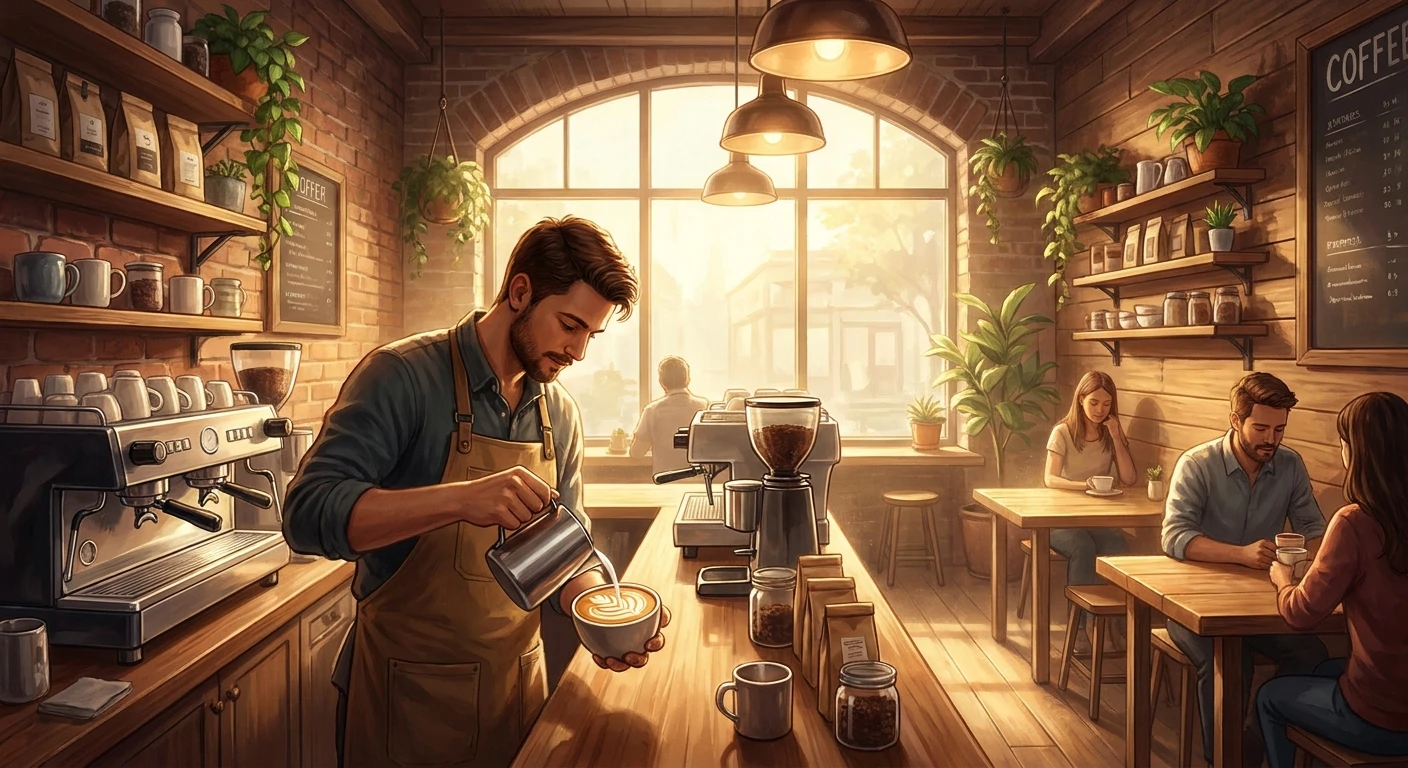
As the third wave gained momentum, the physical layout of the cafe underwent a massive transformation. Older coffee houses often featured high counters and hidden machinery, obscuring the preparation process from the consumer. Modern establishments dismantled these barriers. Espresso machines were lowered, and pour-over stations were placed front and center to showcase the manual skill required to brew a perfect cup. The aesthetic shifted toward minimalism—utilizing natural wood, exposed brick, and abundant natural light—to create a calming environment that directs focus toward the sensory experience of the beverage. This architectural evolution mirrored the shift in the coffee itself: moving from hidden, industrialized processes to transparent, celebrated craftsmanship.
The Modern State of Artisanal Brewing
Today, the specialty coffee industry operates at the intersection of agriculture and technology. Baristas are highly trained technicians who utilize refractometers to measure the total dissolved solids (TDS) in a cup, ensuring that extraction yields fall perfectly within the optimal range of 18 to 22 percent. Advanced water filtration systems strip municipal tap water of impurities before remineralizing it with specific ratios of magnesium and calcium to enhance flavor extraction. This modern state of brewing treats coffee not as a static ingredient, but as a dynamic, highly volatile compound that requires constant adjustment based on humidity, temperature, and the specific degassing timeline of the roasted beans.
The Roasting Chemistry
The transformation of a dense, green agricultural seed into a porous, aromatic coffee bean is entirely dependent on heat application and complex chemistry. When green beans are subjected to temperatures exceeding 160 degrees Celsius, the Maillard reaction begins. This is a chemical reaction between amino acids and reducing sugars that gives browned food its distinctive flavor. As the temperature climbs, caramelization occurs, breaking down complex carbohydrates into simpler sugars that contribute to the sweetness and body of the final cup. A skilled roaster must carefully manage the rate of rise—the speed at which the temperature increases—to ensure the bean develops fully from the inside out without scorching the exterior. The culmination of this process is known as the first crack, an audible pop caused by the release of steam and carbon dioxide, signaling that the coffee is ready to be utilized for specialty brewing.
Extraction Mechanics
Once the coffee is roasted and rested, the focus shifts to extraction. When hot water interacts with ground coffee, it dissolves various compounds at different rates. First to dissolve are the fruity and floral acids, followed by the sweet sugars, and finally the bitter plant fibers and tannins. The goal of any barista is to stop the extraction process at the exact moment the sugars balance the acids, just before the bitter compounds overwhelm the cup.
- Water Temperature: Optimal extraction typically requires water between 90 and 96 degrees Celsius. Cooler water highlights acidity but risks a sour taste, while hotter water increases extraction speed but can lead to harsh astringency.
- Grind Size: The surface area of the coffee particles dictates the contact time with water. Espresso requires a fine grind to create resistance against high-pressure water, whereas a French press utilizes a coarse grind for a prolonged steeping process.
- Brew Ratio: The weight of dry coffee compared to the final liquid output. A standard modern espresso ratio is 1:2, meaning 18 grams of dry grounds will yield 36 grams of liquid espresso.
- Pressure: Traditional espresso machines utilize exactly 9 bars of atmospheric pressure to force water through the compacted coffee puck, emulsifying the natural oils to create the signature crema on top of the shot.
Day 1: The Espresso Baseline
Embarking on a comprehensive tasting journey begins with understanding the foundation of all cafe menus: the straight espresso. On your first day, order a single or double shot of espresso without any milk or sugar. Pay close attention to the visual presentation, specifically the hazelnut-colored crema. As you taste, observe the thick, syrupy body and the intense concentration of flavors. A well-pulled shot should present a harmonious balance of vibrant acidity, natural sweetness, and a lingering, pleasant finish. This baseline dictates the quality of every other drink on the menu.
Day 2: Exploring Pour-Overs
On the second day, pivot away from pressurized brewing and explore a manual pour-over, such as a V60 or Chemex. This gravity-fed brewing method utilizes a paper filter that captures the natural oils and ultra-fine particles, resulting in a cup with unparalleled clarity and a tea-like body. Pour-overs are the optimal way to experience the delicate, nuanced tasting notes of a lightly roasted, single-origin coffee. Notice how the flavor profile evolves dramatically as the beverage cools, often becoming sweeter and more fruit-forward as the temperature drops.
Day 3: Milk Textures and Lattes
Milk is not merely a modifier; it is a canvas. On day three, focus on milk-based beverages by ordering a cortado or a flat white. The objective here is to evaluate the barista’s milk-steaming technique. Perfectly steamed milk, often referred to as micro-foam, has a glossy, wet-paint texture with bubbles so small they are nearly invisible to the naked eye. The heat application breaks down the lactose in the milk, enhancing its natural sweetness without the need for added syrups. The resulting texture should integrate seamlessly with the espresso, creating a velvety mouthfeel.
Day 4: Cold Brew Dynamics
Cold coffee is vastly different from hot coffee poured over ice. For day four, order a slow-steeped cold brew. Because cold water extracts flavor compounds much slower and differently than hot water, the resulting beverage is exceptionally smooth, featuring very low acidity and a heavy, chocolatey body. Take note of the distinct lack of bitterness. This brewing method typically takes between 12 and 24 hours, proving that time can effectively replace heat as the primary variable in the extraction process.
Day 5: Pastry Pairings
A premium cafe curates its food menu to complement its coffee offerings. On day five, engage in a deliberate pairing exercise. Pair a bright, acidic African coffee with a buttery, rich croissant. The high acidity of the brew will cut through the dense fats of the pastry, cleansing the palate between bites. Conversely, try pairing a nutty, chocolate-heavy South American blend with a fruit tart to create a complementary flavor bridge. Understanding these interactions elevates a simple breakfast into a curated gastronomic event.
Day 6: Single-Origin Tasting
Day six is dedicated to exploring terroir—the environmental factors that affect a crop’s phenotype. Order a single-origin coffee, meaning all the beans come from one specific farm or cooperative. A washed Ethiopian coffee might present striking notes of jasmine, bergamot, and black tea, while a naturally processed coffee from Costa Rica might overwhelm the senses with flavors of strawberry jam and dark chocolate. This step allows you to appreciate the immense diversity inherent in the coffee plant before any human intervention occurs.
Day 7: Signature Blends
Conclude your week by returning to the cafe’s signature blend. Unlike single-origins, which celebrate unique and sometimes polarizing flavors, a house blend is meticulously crafted by the roaster to achieve perfect balance and year-round consistency. A great blend usually combines a solid, chocolatey base from Brazil or Colombia with a bright, fruity component from East Africa. By tasting the signature blend after experiencing the individual components throughout the week, you gain a profound respect for the roaster’s palate and blending expertise.
Coffee Myths and Reality
Myth: Dark roast coffee contains significantly more caffeine than light roast coffee.
Reality: The roasting process actually burns off a very small amount of caffeine. Light roasts are denser and contain slightly more caffeine by volume. When measured by weight, the difference is negligible, but dark roasts certainly do not give you a stronger caffeine jolt.
Myth: Espresso is a specific type of coffee bean.
Reality: Espresso is strictly a brewing method, not an agricultural variety or roast level. Any coffee bean, regardless of its origin or roast degree, can be used to pull an espresso shot, provided it is ground finely enough and brewed under pressure.
Myth: A bitter, harsh taste indicates a strong, high-quality cup of coffee.
Reality: Extreme bitterness is almost always a sign of poor roasting, over-extraction, or stale beans. High-quality coffee is characterized by its natural sweetness, vibrant acidity, and balanced flavor profile, not by its ability to assault the palate with ash-like bitterness.
What makes an artisanal cafe stand out from corporate chains?
The primary distinction lies in intention. Artisanal cafes prioritize transparency, utilizing traceable beans and precision brewing techniques rather than relying on automated machines and commodity-grade, over-roasted blends.
Does the water quality genuinely affect the final brew?
Absolutely. Coffee is roughly 98 percent water. If the water contains too much chlorine, lacks necessary minerals, or has an improper pH balance, it will physically prevent the proper extraction of flavor compounds.
How long do roasted beans stay fresh?
Whole beans are at their peak flavor between 7 and 21 days after the roast date. After this window, the coffee rapidly oxidizes, losing its volatile aromatics and taking on a flat, stale flavor.
What is the ideal brewing temperature?
For most brewing methods, water should be between 90 and 96 degrees Celsius (195-205 degrees Fahrenheit). Boiling water can scorch the grounds, while tepid water will result in a sour, under-extracted cup.
Can I replicate this premium experience at home?
Yes, but it requires investment in a high-quality burr grinder, a digital gram scale, and fresh, locally roasted beans. The grinder is the most critical piece of equipment for achieving consistent particle size.
What does single-origin actually mean?
Single-origin indicates that the coffee was grown within a single known geographic origin. This can range from a single country to a specific micro-lot on one individual farm.
Why are some coffees naturally fruity or floral?
Coffee is the seed of a fruit called a coffee cherry. Depending on the soil, altitude, and how the fruit is removed from the seed during processing, those natural, vibrant agricultural characteristics can be preserved and highlighted in the cup.
Should coffee be stored in the refrigerator or freezer?
No. Coffee is highly porous and will absorb moisture and odors from your fridge. It should be stored in an airtight container in a cool, dark cabinet to maximize its shelf life.
What is a flat white?
A flat white is an espresso-based drink originating from Australia and New Zealand. It features a double shot of espresso combined with micro-foamed milk, resulting in a stronger coffee-to-milk ratio than a traditional latte.
How important is the roast date?
The roast date is the most critical piece of information on a bag of coffee. It tells you exactly how fresh the product is, ensuring you are not purchasing beans that have been sitting on a shelf for months.
Understanding the meticulous care that goes into operating a space like Carmelito Cafe transforms a daily habit into a genuine appreciation for the craft. The commitment to sourcing the finest raw ingredients, applying strict scientific principles to the roasting process, and executing flawless extractions creates an unparalleled consumer experience. Now that you understand the mechanics behind the counter, it is time to put this knowledge to use. Visit your local specialty shop, bypass the standard syrup-heavy menu, and order a freshly brewed single-origin pour-over to taste the difference for yourself.