
Life Inside A hutterite colony Explained
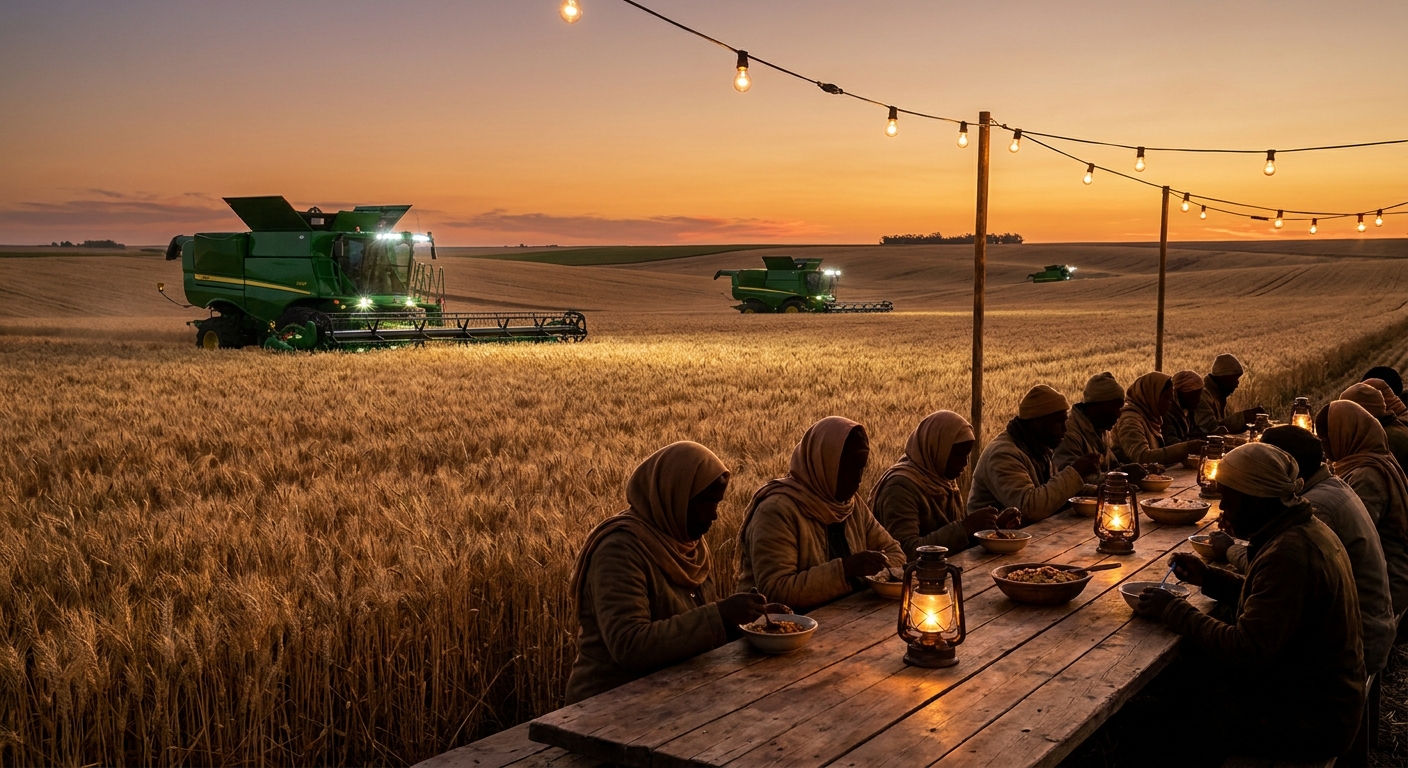
Have you ever wondered what exactly goes on inside a hutterite colony on a random Tuesday? If you drive through the rural landscapes of western North America, you might spot large, highly organized farming settlements that look like self-contained towns. These distinct communal settlements blend deep-rooted religious traditions with surprisingly modern agricultural practices, creating a lifestyle that is totally unique. The juxtaposition of modest, traditional dress and multi-million dollar farming equipment always catches people off guard.
Funny enough, while chatting with a local historian back in Kyiv recently, I realized the historical ties are pretty wild. The Hutterites actually lived in Ukraine for over a hundred years before making their way to North America. Hearing about their time in the Molotschna region made me want to look deeper into how they live today. So, I grabbed a coffee, hit the books, and started mapping out everything you need to know about their daily routines, beliefs, and economic engines. It is fascinating how they balance total isolation from mainstream pop culture with running massive, cutting-edge enterprises. You might think they are just like the Amish, but wait until you hear about their robotic milking machines and GPS-guided combine harvesters. I want to share exactly what makes this fascinating communal living model tick.
The Core Mechanics of the Lifestyle
So, what exactly is the core value proposition of living this way? It boils down to absolute community security and shared purpose. Nobody goes hungry, nobody worries about a fluctuating mortgage rate, and everyone has a clear, defined role from the day they are born. In a typical settlement, all property is held in common. There are no personal bank accounts, no private vehicles, and no individual paychecks. The community provides everything: housing, meals, clothing, and medical care. In return, every member works for the collective good. Let me give you a couple of examples. Look at their massive egg production facilities in Alberta or their custom manufacturing shops in South Dakota. These are not small hobby farms; they are heavy-hitting commercial operations. Absolute cooperation makes these enterprises wildly successful.
To truly grasp how they differ from other traditional Anabaptist groups, checking out a side-by-side comparison really helps.
| Feature | Hutterites | Amish | Mennonites (Old Order) |
|---|---|---|---|
| Property Ownership | Communal (No private property) | Private ownership | Private ownership |
| Technology Use | Embrace industrial & farm tech | Highly restricted | Restricted but varies |
| Daily Meals | Eaten communally in a large hall | Eaten with immediate family | Eaten with immediate family |
| Language | Hutterisch (German dialect) | Pennsylvania Dutch | Plautdietsch or English |
To summarize their daily operational philosophy, you can break it down into a few non-negotiable pillars:
- Absolute Communal Ownership: Based on the early Christian church in the Book of Acts, everything is literally shared. The community buys supplies in bulk, and distribution is based on need.
- Strict Hierarchy and Roles: The leadership consists of a spiritual minister, a colony boss (manager), and a farm boss. Women generally run the communal kitchen, gardens, and sewing operations.
- Industrial-Scale Agriculture: They view technology as a tool for economic survival, not a spiritual threat, provided it is used for the community rather than personal entertainment.
Origins of the Movement
The story begins way back in the radical days of the 16th-century Protestant Reformation. While Martin Luther was shaking up the Catholic Church, a more radical offshoot called the Anabaptists emerged. They believed in adult baptism and strict separation of church and state. Among these groups, a charismatic leader named Jacob Hutter stepped up in 1533 in Tyrol (modern-day Austria). He preached that true Christians should share all material goods. Unfortunately, his radical ideas made him a target, and he was burned at the stake in 1536. But his followers, taking his name, stood firm.
Evolution and Migration
Because of their refusal to bear arms or swear oaths to rulers, the group faced intense persecution across Europe. They essentially became religious refugees, constantly packing up and moving. Over a few centuries, they migrated through Moravia, Transylvania, and Wallachia. Eventually, in the late 18th century, Catherine the Great invited them to settle in the Russian Empire—specifically in the region that is now Ukraine. Here, they established thriving agricultural communities alongside Mennonites. For almost a century, they enjoyed exemption from military service and the freedom to manage their own schools.
The Modern State of Settlements
Everything changed in the 1870s when the Russian government revoked their military exemption. Facing the draft, nearly all of them packed up and moved to North America, settling primarily in the Dakota Territory and western Canada. Today, they are divided into three distinct branches based on the leaders who guided that migration: the Schmiedeleut, the Dariusleut, and the Lehrerleut. Now that we are navigating the economic shifts of 2026, their agricultural impact is massive. They own millions of acres across the US and Canada and produce a significant percentage of the region’s pork, poultry, and grain.
Agricultural Technology and Automation
It is easy to assume that folks wearing suspenders and homemade plaid dresses are doing everything by hand, but that could not be further from the truth. They are often early adopters of multi-million dollar agricultural technology. When you walk into one of their barns, you might see automated climate control systems, robotic milking carousels that use lasers to attach to cows, and computerized feed mixers. Their tractors and combine harvesters are equipped with the latest GPS tracking and auto-steer functions. They understand that to sustain a population of 100 to 150 people per settlement, they must be hyper-efficient. The colony boss essentially acts as a CEO managing a massive corporate budget.
Population Genetics and Demographics
From a scientific standpoint, this group is intensely studied by population geneticists and sociologists. Because they migrated to North America with only about 400 individuals and have remained almost entirely endogamous (marrying strictly within their religion), they present a classic example of the founder effect. This means their gene pool is relatively small.
- They have a closed genetic population, making it easier for researchers to map certain hereditary conditions and map complex genetic traits.
- Historically, they had one of the highest birth rates in the world, often averaging over 10 children per family in the mid-20th century.
- Recently, birth rates have naturally stabilized and declined, matching broader demographic trends, though they still emphasize large families.
- Advancements in prenatal testing and genetic counseling have been quietly integrated to manage hereditary health issues within the settlements.
Step 1: Research the Specific Branch
If you are planning to visit or do business with them, you first need to know who you are dealing with. The Schmiedeleut tend to be slightly more progressive in their clothing and business dealings, while the Lehrerleut are the most conservative. Understanding these subtle differences shows immediate respect.
Step 2: Reach Out Before Visiting
You cannot just treat their home like a tourist attraction. These are private, working farms. Call the farm boss or colony manager ahead of time. Many of them sell produce, meat, or manufactured goods to the public, so inquiring about buying their products is a great icebreaker.
Step 3: Respect the Dress Code
If you are invited to visit, dress modestly. You do not need to wear their traditional clothing, but showing up in respectful, conservative attire demonstrates that you honor their values and boundaries.
Step 4: Buy Their Local Goods
The best way to interact is through commerce. Hit up local farmers’ markets where they set up stalls. Buying their fresh vegetables, baked goods, or famously durable handmade brooms directly supports their community and opens the door for friendly conversation.
Step 5: Ask About the Farming Tech
If you want to get them talking, ask the men about their equipment. They are incredibly proud of their mechanical ingenuity, custom fabrication shops, and crop yields. Showing genuine interest in their work goes a long way.
Step 6: Appreciate the Communal Kitchen
If you are lucky enough to be invited for a meal, accept it gracefully. The food is typically hearty, farm-to-table German-style fare. Just remember that meals are eaten quickly and purposefully—it is not a lingering, hours-long dinner party.
Step 7: Do Not Take Photos Without Permission
Many traditional members hold strict views against photography based on the biblical commandment against graven images. Always ask before snapping a picture, and do not be offended if they politely decline. Respect their privacy first and foremost.
Myths vs Reality
Myth: They reject all forms of modern technology.
Reality: They are power users of agricultural technology, computers, and specialized software for business logistics. They just restrict technology that promotes individual isolation, like personal televisions or unmonitored internet access.
Myth: They are exactly the same as the Amish.
Reality: While both are Anabaptists, the Amish emphasize private family ownership of farms and reject grid electricity. This group shares all property completely and runs heavily electrified, industrialized operations.
Myth: Nobody is ever allowed to leave the settlement.
Reality: While it is emotionally difficult to leave behind the only world they know, people are free to go. Some young adults do leave for mainstream society, though many eventually return because of the unmatched safety net the community provides.
Do they pay taxes?
Yes, absolutely. They pay property taxes, corporate taxes on their farming operations, and income taxes. They are fully compliant with federal and local tax laws.
What language do they speak?
Among themselves, they speak Hutterisch, an old Carinthian German dialect. However, almost all members are fluent in English, which they use for business and interacting with outsiders.
Can an outsider join the community?
It is technically possible but incredibly rare. Adapting to the strict communal rules, giving up all personal assets, and learning the dialect make it a massive hurdle for anyone not born into the culture.
Who leads the group?
Each settlement is semi-autonomous. They vote for a minister (who handles spiritual matters), a colony boss (who handles finances and overall management), and a farm boss (who directs the agricultural work).
How large is a typical settlement?
A standard settlement houses between 100 and 150 people. Once a community gets too large, they purchase new land and physically divide the group to start a new settlement, a process called branching out.
Do children go to public school?
Typically, no. They build their own schools right on the property. They hire certified outside teachers to cover standard curriculum (math, English, science) up to the 8th grade, alongside their own religious instruction.
Are there personal bank accounts?
No. All generated income goes into a central fund managed by the colony boss. Members are given small allowances for specific needs, but there is no personal wealth accumulation.
Wrapping this all up, looking at a hutterite colony reveals a brilliant, resilient blueprint for communal living that has survived centuries of upheaval. Even in 2026, the contrast is wild: holding onto 16th-century theology while expertly operating precision farming tech. If you ever get the chance to buy their fresh produce at a market or respectfully visit their lands, take it. It is a rare glimpse into a deeply intentional way of life. If you found this breakdown helpful, share it with a friend who loves history, and keep exploring the fascinating subcultures right in our own backyards!