Everything You Need to Know About the Junebug Bug
Ever wonder why the junebug bug seems to randomly crash into your porch lights every single summer night? Seriously, it’s like they have zero navigational skills. Back when I was growing up in Kyiv, we’d sit out on the apartment balcony during those warm early June evenings, sipping cold kvass, just hanging out. Suddenly, BAM! A heavy, incredibly clumsy beetle would smack right into the screen door, fall on its back, and spin around like a tiny broken helicopter. We used to laugh so hard at how uncoordinated they were. Fast forward to 2026, and these little guys are still doing the exact same thing no matter where you live on the planet.
They might seem like just a hilarious seasonal annoyance, but these fascinating insects actually play a massive role in our ecosystem, soil health, and local food chains. They are working behind the scenes in ways most people never notice. I’m going to break down exactly why they behave this crazy way, what makes their biology so unique, and how you can coexist with them without losing your mind when they swarm your outdoor lights this summer. Grab a coffee, and let’s get right into the weird, wild world of these beetles.
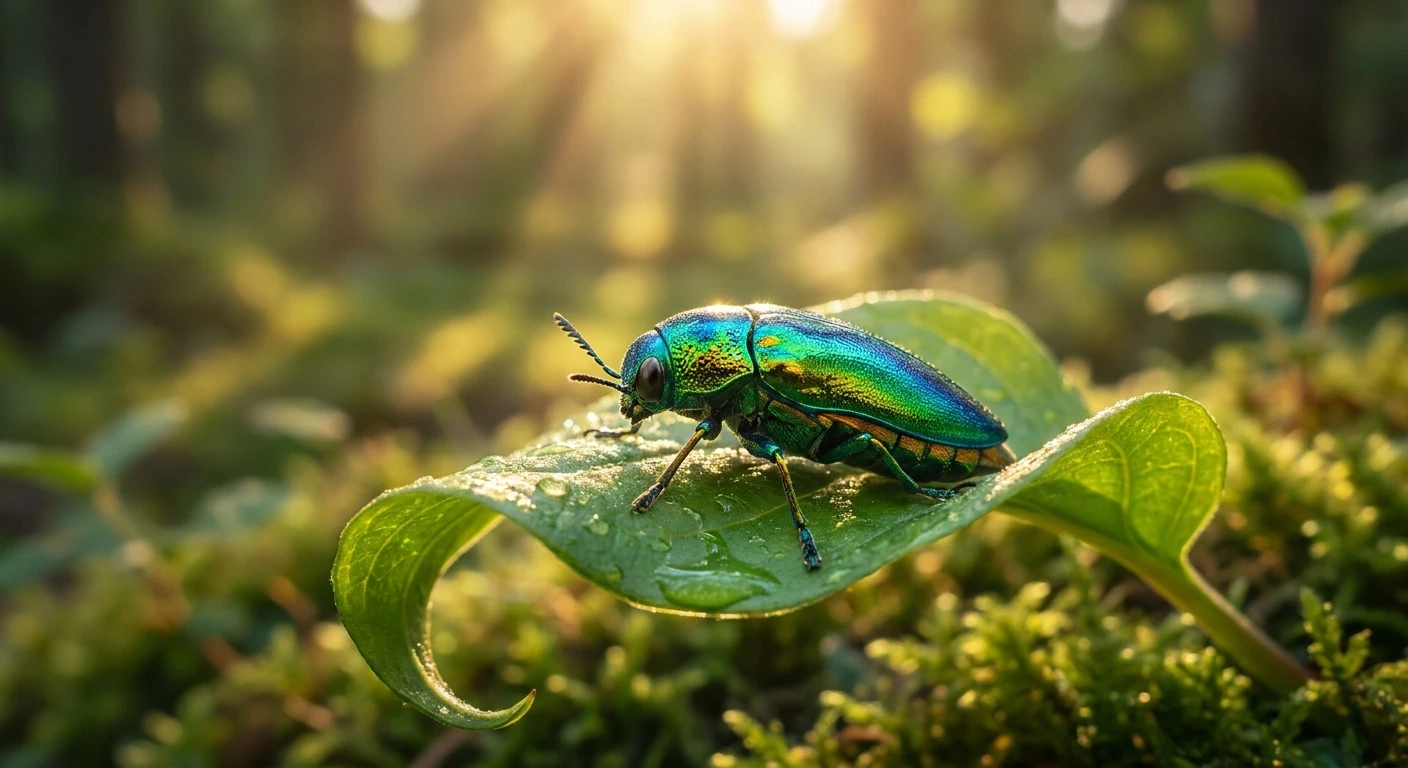
To really understand what we are dealing with, we have to look past their clumsy flying habits. The junebug, often just called a June beetle, belongs to a much larger family of scarab beetles. During their larval stage, they exist as white grubs living underground, munching away at organic matter and plant roots. This is where they spend the vast majority of their lives, completely hidden from our view. Then, as adults, they emerge for a frantic, short-lived mating season above ground.
Here is a quick breakdown of their lifecycle and ecological impact so you can see exactly what they do:
| Life Stage | Primary Habitat | Ecological Role & Diet |
|---|---|---|
| Egg | Buried 2-5 inches in soil | Inactive; waits for moisture to hatch |
| Grub (Larva) | Sub-surface turf and root zones | Eats grassroots; aerates soil but can damage lawns |
| Adult Beetle | Trees, shrubs, and open air | Feeds on foliage; serves as vital food for wildlife |
You might be asking yourself, “Why should I even want these things around my house?” Well, here is the value proposition: they are incredible bio-indicators and an essential food source. Example 1: Birds absolutely love them. Crows, blue jays, and even owls rely on the sudden explosion of adult beetles for high-protein meals. Example 2: Natural soil aeration. As the grubs move around underground, they create tiny tunnels that help water and oxygen reach the deeper soil layers, keeping the earth healthy.
If you feel like they are getting a bit too overwhelming in your yard, there are completely natural ways to handle them. Here is how you can manage them without harsh chemicals:
- Switch your bulbs: Swap out your bright white or blue porch lights for warm yellow or LED bug lights. They simply cannot see these wavelengths as clearly.
- Attract natural predators: Set up birdhouses or small feeding stations to encourage local birds to stick around your property.
- Use beneficial nematodes: These microscopic organisms can be sprayed onto your lawn to naturally keep the underground grub population in check before they even hatch into adults.
Origins of the Species
Let me tell you about where these clumsy fliers actually come from, because their backstory is pretty wild. The junebug belongs to the genus Phyllophaga, which literally translates from Greek to “leaf eater.” They are part of the massive Scarabaeidae family, meaning they are direct cousins of the famous scarab beetles that the ancient Egyptians practically worshipped. Millions of years ago, the ancestors of these bugs were scurrying around alongside dinosaurs, feeding on the very first broadleaf plants that evolved on Earth. They were designed to process tough, fibrous plant material, which is why their mandibles are surprisingly strong for their size.
Evolution Over Centuries
As the climate shifted over millions of years, these beetles had to adapt to changing seasons. Instead of staying active year-round like tropical insects, they evolved an incredibly synchronized lifecycle. They learned to lay their eggs deep in the soil where the temperatures remain stable. The grubs evolved the ability to enter diapause—a sort of bug hibernation—during freezing winters. They slow their metabolism down to almost zero, just waiting out the cold. Then, when the soil temperature hits that perfect sweet spot in late spring, they pupate and eventually emerge as the hard-shelled adults we see aggressively headbutting our windows.
Modern State and Distribution
Today, there are hundreds of distinct species of Phyllophaga spread entirely across the Northern Hemisphere. You will find them everywhere from the deep forests of Canada to the warm, humid backyards of Florida, and all across Europe and Asia. Because of modern suburban landscaping, we’ve actually created absolute paradise environments for them. Think about it: massive expanses of perfectly watered lawn grass for their grubs to eat, and bright artificial lights everywhere to attract the adults. We essentially built five-star resorts for them, which is why their populations in residential areas seem so intense right now.
Understanding Their Unique Phototaxis
Let’s get a bit nerdy for a second. Why are they so obsessed with light? It all comes down to a biological phenomenon called positive phototaxis. Most nocturnal insects use the moon and stars to navigate. They keep the distant light source at a constant angle to their eye, which allows them to fly in a perfectly straight line. But when you introduce a porch light, the light source is incredibly close. As the beetle tries to keep that light at a constant angle, it ends up spiraling inward, flying in tighter and tighter circles until it literally crashes into the bulb. It’s a glitch in their ancient navigation software.
The Anatomy of a Clumsy Flyer
You probably notice they aren’t exactly graceful. That’s because of their anatomy. They have thick, heavy bodies and relatively small wings. Their hard outer shell, called the elytra, has to lift up and out of the way for their membranous flying wings to deploy. It creates a lot of drag. Here are a few cool scientific facts about their bodies:
- They possess highly sensitive antennae that look like tiny, fan-shaped clubs used to detect female pheromones from miles away.
- Their exoskeleton is made of cross-linked chitin, which gives them that distinct “crunch” and protects them from moderate impacts.
- Their legs are equipped with sharp, tiny spurs that are completely harmless to humans but allow them to grip violently shaking leaves during heavy windstorms.
Day 1: Assess Your Soil Health
If you want to keep your yard balanced this summer, you need a plan. On the first day, grab a small shovel and dig up a one-square-foot patch of your lawn, about three inches deep. Count the white grubs you see. If you find fewer than five, your lawn is perfectly healthy. If you find more than ten, you might have a slight infestation that needs addressing. Just flip the soil back over and pat it down; the grass will recover quickly.
Day 2: Optimize Porch Lighting
Today is all about changing the signals you are sending to the local bug population. Head to the hardware store and pick up some yellow “bug lights” or warm-spectrum LEDs. Replace all your outdoor entry lights. You will immediately notice a massive drop in the number of bugs swarming your doors at night. It’s a quick, cheap fix that makes evening hangouts so much better.
Day 3: Natural Nematode Application
If your soil check on Day 1 showed too many grubs, today is the day to apply beneficial nematodes. These are microscopic worms that you mix with water and spray onto your lawn. They naturally hunt down and neutralize the grubs without harming your grass, pets, or family. Make sure you apply them in the late evening when the soil is cool and damp.
Day 4: Hand-picking and Monitoring
Take a walk around your garden right at dusk. Look at the leaves of your favorite ornamental plants and fruit trees. If you see adult beetles munching away, just flick them into a bucket of soapy water. Hand-picking is the most direct, environmentally friendly way to protect specific plants without spraying broad-spectrum pesticides that kill bees and butterflies.
Day 5: Bird Feeder Strategy
Time to call in the air force. Set up a suet feeder or a standard seed feeder near the edges of your property. By drawing birds to your yard regularly, they will start patrolling the grass for grubs and snatching adult beetles out of the air and off the trees. You are basically outsourcing your pest control to nature.
Day 6: Lawn Hydration Adjustments
Did you know adult beetles prefer to lay eggs in highly irrigated, damp soil? If you water your lawn every single day, you are rolling out the red carpet for them. Adjust your sprinkler system to water deeply but infrequently. Letting the top inch of soil dry out between waterings makes it way less attractive for egg-laying females.
Day 7: Long-Term Ecosystem Balance
Take a step back and look at your yard. The goal isn’t to eradicate every single bug; it’s to create a balanced habitat. By keeping your soil naturally aerated, letting birds do their job, and managing your artificial lighting, you’ve established a self-regulating ecosystem. You can finally enjoy your summer evenings in peace.
There are so many crazy rumors about these bugs, so let’s clear them up right now.
Myth: They bite humans and can spread diseases.
Reality: They completely lack the mouthparts to bite humans. Their mandibles are only designed for chewing soft plant material. They are entirely harmless to us.
Myth: They are completely blind, which is why they crash into things.
Reality: They actually have excellent vision, especially in low light. Their crashing is caused by light confusion, not blindness.
Myth: A harsh winter will kill all the grubs in the ground.
Reality: The grubs burrow below the frost line and produce their own natural antifreeze chemicals. They survive freezing temperatures with absolutely no problem.
Do junebugs sting?
Nope! They do not have stingers, venom, or any mechanism to sting you. The little prickles you feel if you hold them are just the spurs on their legs trying to get a grip.
How long do they live?
The entire lifecycle takes about one to three years depending on the species, but the adult flying stage only lasts for about two to three weeks.
Are they toxic to dogs or cats?
They are not toxic at all. However, if your pet eats a massive amount of them, the hard shells might cause mild stomach upset, so try to discourage it.
Why are they so incredibly loud?
Because they are heavy and their wings have to beat at a very high frequency to keep them airborne. The buzzing is just the sound of their wings working overtime.
What animals naturally eat them?
Almost everything! Frogs, toads, bats, skunks, raccoons, crows, and even some species of predatory wasps rely heavily on them for food.
Where do they go during the day?
They hide under leaves, in thick grass, or burrow just beneath the surface of the soil to escape the hot sun and birds.
How can I keep them out of my house?
Keep your window screens in good repair and turn off indoor lights if your windows are open. They will naturally stay outside where they belong.
So there you have it, folks. The junebug bug isn’t a monster trying to attack you on your porch; it’s just a confused, hard-working part of the natural food web. Next time you see one spinning on its back, maybe give it a gentle flip over and send it on its way. If you found this deep dive into backyard biology helpful, share this guide with your neighbors so you can all coordinate your porch light strategy this summer!