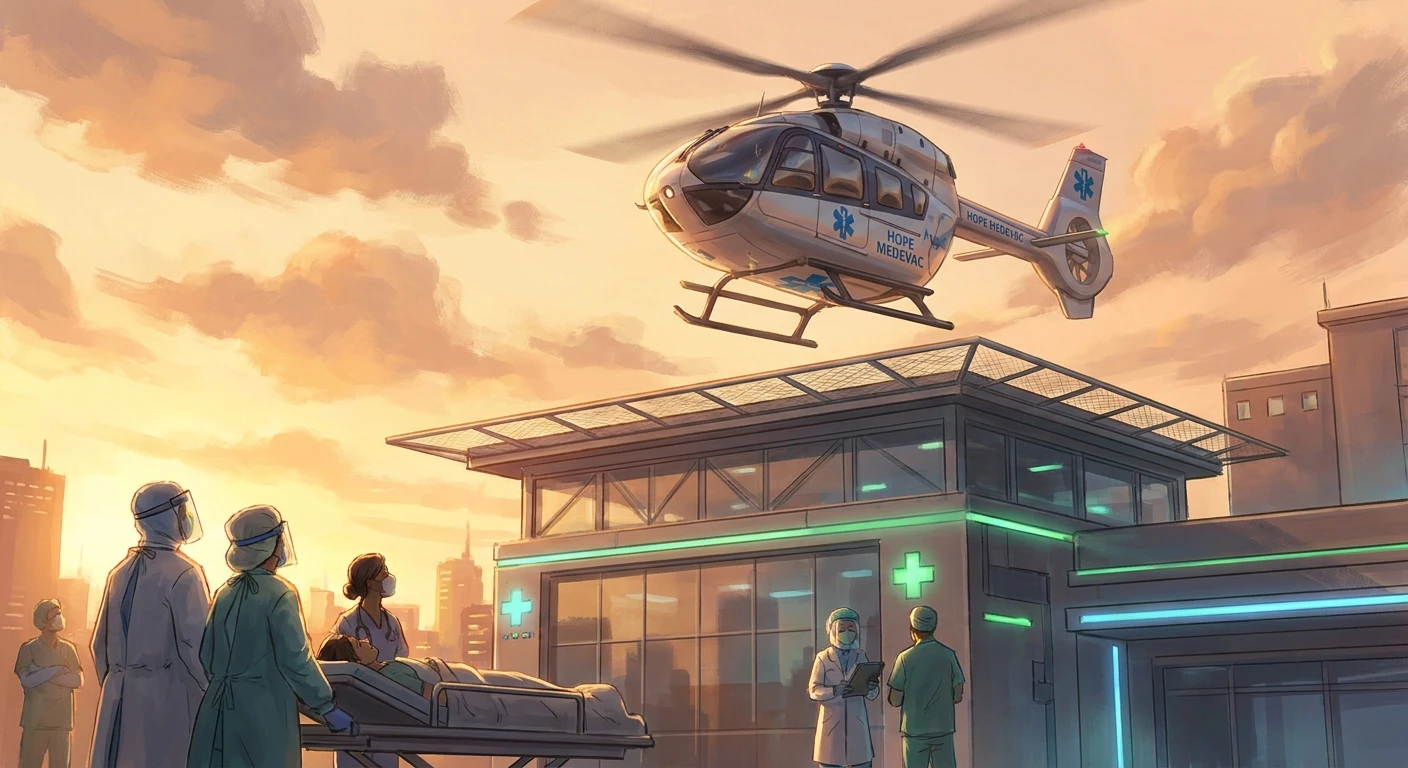
The Medical Impact of Sunil Sookram and Modern Emergency Care
When you talk about the rapid evolution of pre-hospital critical care and emergency medicine, the name Sunil Sookram frequently comes up as a benchmark for clinical excellence. Medical emergencies require immediate, decisive action, and physicians specializing in this field carry the immense responsibility of making life-altering choices in a matter of seconds. Emergency medical services, particularly aeromedical transport operations like the STARS Air Ambulance network, rely heavily on the expertise of dedicated practitioners to bring intensive care capabilities directly to the patient.
You might wonder what sets advanced emergency medicine apart from standard hospital care. It is the ability to adapt to unpredictable environments. Medical leaders who operate in these high-stress situations understand that bringing the emergency room to the roadside or the remote clinic changes the entire trajectory of patient survival. Pre-hospital care is not just about transportation; it is about initiating aggressive resuscitation, advanced airway management, and hemodynamic stabilization before the patient ever crosses the threshold of a hospital. The dedication of experts in this highly specialized medical discipline ensures that geographical distance does not dictate a patient’s chances of survival, bridging the gap between rural emergencies and urban trauma centers.
Read also: Nia Health: AI Solutions for Chronic Skin Conditions; Nova Scotia School Cancellations Guide.
Emergency medical response operates on the principle that time is tissue. The longer a patient goes without oxygen or definitive surgical control, the worse the prognosis. Bringing advanced medical interventions to the scene provides a massive value proposition for public health. Think about two clear examples. First, consider severe trauma cases in rural areas; deploying a physician-led helicopter crew means a patient receives blood transfusions and advanced airway management an hour earlier than standard ground transport would allow. Second, in cases of complex cardiac events, mobile critical care units can administer advanced thrombolytics or establish mechanical circulatory support right in the patient’s living room. The ability to intercept disease processes early changes everything.
| Emergency Scenario | Standard Response Time | Advanced Intervention Impact |
|---|---|---|
| Severe Rural Trauma | 45-90 minutes | Immediate scene blood transfusion |
| Complex Cardiac Arrest | 15-30 minutes | Pre-hospital ultrasound and meds |
| Major Stroke | 60+ minutes | Rapid neurological stabilization |
To execute these complex medical maneuvers outside a controlled hospital environment, emergency response teams follow a strict, highly coordinated sequence of actions. These core phases dictate the rhythm of critical care response:
- Scene Assessment and Triage: The immediate evaluation of environmental safety and the prioritization of patient injuries based on severity and physiological stability.
- Aggressive Scene Resuscitation: The application of life-saving interventions, including intubation, surgical airways, chest tube insertion, and the administration of blood products directly at the site of the incident.
- Critical Care Transport: The continuous, intensive monitoring and treatment of the patient while moving them to a definitive care facility, ensuring no drop in medical attention occurs during the journey.
Origins of Organized Emergency Medicine
The concept of bringing organized medical care to the battlefield or the roadside has deep historical roots, but emergency medicine as a distinct, specialized medical discipline only began to take true shape in the late 20th century. Before the 1960s and 1970s, ambulances were largely just transport vehicles, often operated by local funeral homes, with no medical care provided en route. The shift occurred when the medical community recognized that immediate, standardized interventions could drastically reduce mortality rates from trauma and cardiac events. Physicians began moving out of the traditional wards to establish dedicated emergency departments, creating a new frontier in acute care focused entirely on unscheduled, immediate medical needs.
The Evolution of Air Ambulance Protocols
Aeromedical transport fundamentally altered the logistics of emergency response. Initially pioneered by military operations for medical evacuation, helicopters transitioned into civilian healthcare systems to conquer the challenges of geography and traffic. Early air ambulance programs focused primarily on speed, rushing the patient to the nearest hospital. However, as the discipline matured, the focus shifted from simply moving patients quickly to bringing a fully equipped intensive care unit to the patient. Protocols evolved to require highly trained medical personnel, capable of performing complex surgical and medical procedures in the cramped, noisy environment of a flying helicopter.
The Modern State of Critical Care Logistics
Today, the logistics of critical care transport resemble a highly orchestrated military operation blended with cutting-edge medical science. Modern emergency systems utilize real-time data tracking, advanced meteorological forecasting for aviation, and integrated communication networks that link the transport team directly with trauma surgeons at the receiving hospital. This modern framework ensures that the moment a critical patient is identified, the entire regional healthcare infrastructure mobilizes to receive them, minimizing delays and maximizing the chances of a full recovery. Inter-agency coordination has never been smoother or more sophisticated.
The Physiology of Trauma Response
Understanding severe medical emergencies requires a close look at how the human body reacts to massive stress and injury. When a person experiences severe trauma, the body enters a state of physiological shock. This is not emotional shock, but rather a catastrophic failure of the circulatory system to provide enough oxygenated blood to the vital organs. The body attempts to compensate by constricting peripheral blood vessels and increasing the heart rate, a phenomenon known as hemodynamic instability. If this condition is not rapidly corrected with fluid resuscitation and blood products, the resulting hypoxia, a critical lack of oxygen at the cellular level, leads to irreversible organ damage. Emergency physicians focus intensely on managing these physiological cascades, balancing blood pressure, oxygenation, and acid-base status to keep the patient viable until they reach an operating room.
Advanced Aeromedical Transport Technologies
Operating an intensive care unit inside a moving aircraft requires specialized technology designed to withstand vibration, altitude changes, and extreme temperatures. Standard hospital equipment often fails in these conditions, necessitating ruggedized medical devices engineered specifically for flight.
- Portable Ultrasound (POCUS): Allows rapid diagnosis of internal bleeding or collapsed lungs directly at the scene, guiding immediate surgical interventions.
- Video Laryngoscopy: Utilizes a small camera on the end of a breathing tube guide, enabling providers to secure an airway in patients with complex facial trauma or in awkwardly positioned spaces.
- Mechanical CPR Devices: Automated machines that provide perfect, continuous chest compressions during transport, freeing up the medical team to administer drugs and manage the airway.
- Portable Blood Warmers: Devices that rapidly heat refrigerated blood products to body temperature as they are being transfused, preventing the patient from developing lethal hypothermia.
- Advanced Transport Ventilators: Compact machines that mimic the complex breathing support systems found in hospital intensive care units, adapting to changes in atmospheric pressure during flight.
Recognizing When to Call for Advanced Medical Help
Knowing exactly when a situation demands emergency medical intervention saves lives. You should bypass standard urgent care and immediately contact emergency services if someone experiences sudden, severe chest pain radiating to the arm or jaw, difficulty breathing, sudden numbness or weakness on one side of the body, or an altered level of consciousness. Massive bleeding that does not stop with direct pressure, severe burns, and major blunt force trauma also require the immediate dispatch of high-level emergency responders. Trusting your instincts when someone appears acutely unwell is always the safest course of action, as early activation of the 911 system drastically reduces the time to definitive care.
Preparing Patient Information for Emergency Responders
When paramedics or an air ambulance crew arrives, they need precise information immediately. You can drastically improve the efficiency of their care by having specific details ready. Keep a printed list of the patient’s current medications, exact dosages, and any known drug allergies readily accessible. Knowing the patient’s past medical history, particularly any cardiac, respiratory, or neurological conditions, helps the medical team avoid adverse drug interactions and tailor their resuscitation efforts. If the emergency involves trauma, be prepared to describe the exact mechanism of injury, such as the speed of a vehicle crash or the height of a fall.
Supporting Local Air Ambulance Services
Many advanced aeromedical transport services operate as non-profit organizations or rely heavily on community funding to maintain their operations. You can actively support these vital services by participating in local fundraising lotteries, volunteering at community awareness events, or making direct financial contributions. Corporate sponsorships and community partnerships ensure that these flying intensive care units remain fueled, equipped, and ready to respond when rural or isolated communities face medical catastrophes. Community backing is the lifeblood of specialized medical aviation.
Pursuing a Career in Emergency Healthcare
If the high-stakes environment of emergency medicine appeals to you, the field offers numerous challenging and rewarding paths. Becoming a primary care paramedic requires specialized college training, while advanced care paramedics undergo further rigorous education in pharmacology and invasive procedures. For those aiming for the highest level of pre-hospital care, completing medical school followed by a residency in emergency medicine and a fellowship in pre-hospital or retrieval medicine provides the necessary expertise to lead critical care transport teams, much like the top professionals shaping the industry today.
Myth: Air ambulances are simply fast flying taxis used to beat highway traffic.
Reality: Modern air medical helicopters function as highly advanced flying intensive care units. They are staffed by specialized medical teams, including critical care nurses, paramedics, and physicians, who perform complex surgical and medical interventions en route.
Myth: Emergency medicine focuses exclusively on treating severe physical trauma and car accidents.
Reality: While trauma is a significant component, emergency medical professionals manage a massive spectrum of acute illnesses, including severe sepsis, complex cardiac arrhythmias, strokes, toxicological overdoses, and complicated childbirths in the field.
Myth: The golden hour is an absolute deadline, and patients cannot survive if transport takes longer.
Reality: The golden hour is a historical guiding principle emphasizing urgency. With modern pre-hospital interventions, medical teams bring definitive care to the patient much earlier, often extending the window of viability and improving long-term survival rates despite longer transport times.
Myth: Doctors on helicopters perform the exact same procedures as paramedics.
Reality: Physicians bring an expanded scope of practice, executing advanced surgical procedures and administering specialized pharmacological treatments that standard paramedic protocols do not cover.
What is pre-hospital critical care?
It is the delivery of intensive, hospital-level medical interventions to patients at the scene of an emergency and during transport to a definitive care facility.
Why do physicians fly on some medical helicopters?
Physicians provide an expanded scope of practice, allowing for advanced surgical procedures, complex airway management, and the administration of specialized medications that standard paramedic protocols may not permit.
How do medical teams communicate with the hospital?
Transport teams use encrypted satellite and radio communications to transmit real-time patient data, electrocardiograms, and vital signs directly to receiving trauma surgeons.
Are air ambulances safe for patients with severe injuries?
Yes, the medical crews are specifically trained in aviation physiology and understand how changes in altitude and pressure affect trauma patients, adjusting their treatments accordingly.
Who decides if a helicopter is dispatched?
Emergency dispatch centers use specialized triage algorithms and consult with transport physicians to determine if a patient’s condition and location warrant the deployment of an air ambulance.
Can family members ride in the air ambulance?
Generally, family members cannot ride along due to strict weight, space, and safety regulations inside the highly confined medical cabin.
How fast do medical helicopters fly?
Most modern medical helicopters cruise at speeds between 130 and 150 miles per hour, significantly reducing transit times from rural areas.
When you look at the dedication of professionals like Sunil Sookram and the entire emergency medical community, it is clear that their expertise fundamentally changes the landscape of modern healthcare. These specialized teams stand ready to bring order to chaos, ensuring that life-saving care is never out of reach regardless of your location. Take the time to support your local emergency services, learn basic first aid and CPR, and take an active role in keeping your community safe and prepared for the unexpected.