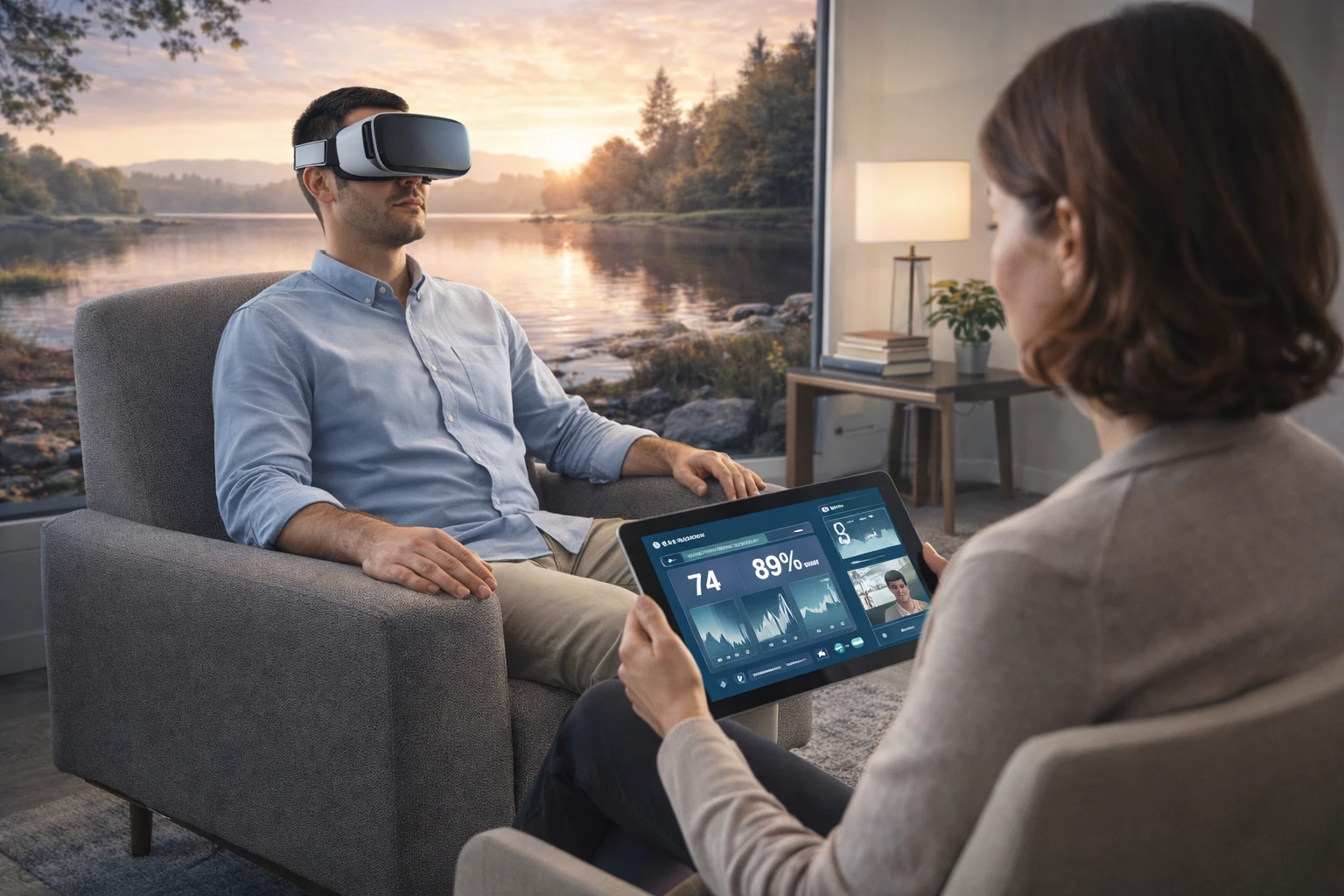
The Digital Shift in Canadian Mental Care
It is no secret that finding a therapist in Canada these days can feel like trying to win the lottery, but without the payout. We have all been there-sitting on a waitlist for eight months just to get forty-five minutes of someone’s time. It is frustrating. Honestly, it is exhausting. But something is shifting in the background. While the traditional system struggles to keep up, technology is stepping in to fill the gaps. We are not just talking about Zoom calls anymore. We are looking at a full-blown digital toolkit that is changing how we handle stress, anxiety, and the heavy stuff that comes with living in 2026.
Digital therapeutics and Virtual Reality (VR) are no longer sci-fi concepts. They are becoming real options for people from Halifax to Vancouver. And the best part? You do not have to leave your couch or deal with a sterile waiting room. It is weird to think that a headset or an app could be as effective as a face-to-face chat, but the data is starting to back it up. Let’s look at why this is happening and what it actually means for your daily life.
Why Canada is Betting Big on Tech
The reality of our geography makes digital care a necessity, not just a luxury. If you live in a rural part of Alberta or the North, your “local” clinic might be a three-hour drive away. Digital tools erase that distance. Plus, let’s be real-there is still a bit of a stigma around walking into a mental health office in a small town where everyone knows your truck. An app offers a level of privacy that traditional brick-and-mortar clinics just can’t match.
Government funding is also flowing into these sectors because, frankly, it is cheaper and more scalable than building new hospitals. It is a pragmatic move. If a thousand people can use a validated CBT app while they wait for a specialist, that is a thousand people who aren’t in a state of total crisis by the time their name comes up on the list.
The Rise of Software as Medicine
When we talk about digital therapeutics (DTx), we aren’t talking about those generic “relaxing sounds” apps that just play rain noises while you try to sleep. We are talking about clinically validated software. These are programs designed to treat specific conditions like insomnia, depression, or PTSD. Think of it as a prescription, but instead of a pill, you get a login.
The beauty of these tools is that they are active. They don’t just track your mood; they give you homework. They use Cognitive Behavioral Therapy (CBT) techniques to help you rewire how you react to triggers. It is hard work, but it is accessible. You can do a session at 2:00 AM when the house is quiet and your brain won’t shut off. That kind of 24/7 availability is a total lifesaver for people with erratic schedules or kids.
Current Digital Tools vs Traditional Therapy
| Feature | Traditional Therapy | Digital Therapeutics (DTx) |
|---|---|---|
| Availability | Business hours only | 24/7 access via device |
| Cost | $150-$250 per session | Subscription or one-time fee |
| Wait Times | Weeks to months | Instant access |
| Environment | Clinical office | Home or anywhere private |
| Interaction | Human-to-human | Software-guided / AI-driven |
VR is More Than Just Gaming
If you haven’t tried VR lately, you might think it is just for teenagers playing rhythm games. But in the world of mental health, VR is a powerhouse. It is particularly effective for exposure therapy. Imagine you have a paralyzing fear of heights or public speaking. In a VR environment, a therapist can put you on top of a virtual CN Tower or in front of a virtual crowd. It feels real enough to trigger your heart rate, but your brain knows you are safe.
This “controlled simulation” allows people to practice coping mechanisms in a space where nothing can actually hurt them. For veterans or first responders dealing with PTSD, VR can recreate specific environments to help them process trauma in a way that talk therapy sometimes can’t reach. It is immersive. You aren’t just talking about your feelings; you are living through them and learning to stay grounded.
Popular VR Applications in 2026
* Exposure therapy for phobias (spiders, flying, crowds).
* Stress reduction through “Bio-feedback” environments.
* Pain management (distracting the brain during medical procedures).
* Social skill training for neurodivergent individuals.
* Guided meditation in hyper-realistic nature settings.
Is it Actually Effective?
That is the big question, right? Does it actually work or is it just a shiny distraction? The clinical trials are showing that for moderate anxiety and depression, digital tools can be just as effective as low-intensity human therapy. It is not a replacement for a psychiatrist if you are in a major crisis, but for the millions of people in the “middle ground,” it is a game-changer.
The key is engagement. A tool is only as good as your willingness to use it. That is why developers are using “gamification” to keep people coming back. You earn badges, you see progress charts, and you get reminders. It sounds a bit cheesy, but it works. When you can see your stress levels trending down over a month, it gives you a sense of control that is often missing when you feel mentally unwell.
The Costs and Accessibility in Canada
While many of these apps are “free” to download, the real-deal therapeutic versions often require a subscription. However, more Canadian employer benefit plans are starting to cover these costs. Sun Life, Manulife, and Canada Life have all added digital mental health options to their portfolios. It makes sense for them-healthy employees are productive employees.
If you are paying out of pocket, a high-end DTx program might cost you $50 a month. Compare that to $200 for a single hour with a psychologist, and the math starts to look pretty good. For a lot of students or young professionals in cities like Toronto or Vancouver where rent is eating 60% of their income, this is the only way they can afford any help at all.
Top Digital Platforms Used by Canadians
| Platform | Specialization | User Feedback |
|---|---|---|
| MindBeacon | CBT & Guided Therapy | Highly structured and effective |
| AbilitiCBT | Anxiety & Depression | Great for workplace stress |
| Starship (VR) | Adolescent Mental Health | Engaging for younger users |
| Healium | Stress & VR Meditation | Excellent for quick relief |
The Privacy Hurdle
We have to talk about the elephant in the room: data. When you use an app for your mental health, you are sharing your deepest anxieties and moods with a server. In Canada, we have pretty strict laws like PIPEDA, but people are still nervous. Who owns that data? Could an insurance company see it and raise your rates?
Most reputable platforms use bank-level encryption, but it is always a trade-off. You are trading a bit of privacy for massive convenience and lower costs. Most users seem okay with that, but it is something to keep an eye on as the tech gets more invasive, potentially tracking your eye movements or heart rate through your phone or headset.
What About the Human Connection?
One worry I hear a lot is that we are losing the “human touch.” And yeah, there is something about sitting in a room with a person who is looking you in the eye and nodding while you vent. A computer can’t replace empathy. Not yet, anyway. But many of these digital tools are being used as a “hybrid” model.
In a hybrid setup, you might see a human therapist once a month, but use an app every single day to track your progress and do exercises. This actually makes the time you spend with the human much more productive. You don’t have to spend twenty minutes explaining how your week went because the therapist can just look at your app data and say, “I see Tuesday was rough, let’s talk about that.”
The Future of VR Therapy in Schools
One area where we are seeing a lot of movement is in schools. Canadian universities are starting to set up “VR Wellness Rooms.” Instead of a dark room with a beanbag chair, students can put on a headset and spend ten minutes in a virtual forest or a calm beach. It is a way to hit the “reset” button on the brain during exams.
For younger kids, VR is being used to teach empathy and social cues. It is a safe way to practice navigating a busy hallway or a playground conflict. Since kids are already tech-literate, they don’t see it as “therapy”-they just see it as a cool tool that helps them feel better.
Things to Keep in Mind Before Trying Digital Care
* Check if the app is clinically validated or just a “wellness” app.
* See if your workplace insurance covers the subscription.
* Be honest with yourself about whether you need a human or a tool.
* Make sure you have a private space where you won’t be interrupted.
* Don’t expect overnight results; it still takes work.
The “Winter Blues” and Tech
Living in Canada means dealing with the “Big Dark” every year. Seasonal Affective Disorder (SAD) is a real beast for us. Traditionally, we used light boxes, which are fine, but they are boring. Now, there are VR programs that simulate a bright, sunny day in the Mediterranean. You can get your “sunlight” and a change of scenery without the $800 flight to Mexico.
It is a small thing, but when it has been grey for three weeks in London, Ontario, being able to spend twenty minutes in a bright, virtual environment can actually boost your mood and keep you going. It is about using every tool in the box to stay sane during the long winters.
Can VR Help with Loneliness?
Loneliness is a massive part of the current mental health crisis, especially for seniors. Virtual social spaces are becoming a way for people to connect without the physical strain of travel. Imagine a senior in a care home in Regina being able to “sit” in a virtual cafe and chat with their grandkids in Montreal. It is not the same as a hug, but it is a hell of a lot better than a phone call.
These shared virtual spaces are becoming more sophisticated. You can watch a movie together, play a game, or just hang out. For people who are housebound due to disability or age, this tech is a window back into the world.
The Challenges of Implementation
It is not all sunshine and rainbows, though. There are real hurdles. For one, the hardware is expensive. A decent VR headset still costs several hundred dollars. If you are already struggling to pay for groceries, a Meta Quest is not at the top of your list. We need programs that lend out this gear, much like libraries lend out books.
Then there is the “tech fatigue.” We already spend all day looking at screens for work. The last thing some people want to do is strap another screen to their face to “relax.” Finding the balance between using tech to heal and getting overwhelmed by it is something we are all still figuring out.
What Experts Are Saying in 2026
Psychologists are largely coming around to the idea. Initially, there was a lot of pushback-mostly because people fear change and, let’s be honest, their jobs. But now the consensus is that these tools act like “force multipliers.” They allow one therapist to help way more people effectively.
The focus is now on quality control. With thousands of apps hitting the stores, how does a regular person know which one is legit? The Canadian Mental Health Association (CMHA) and other bodies are working on “Seal of Approval” systems so you can tell the difference between a science-based tool and a cash-grab.
The Impact on the Healthcare System
If we can move 20% of mental health care to digital platforms, the strain on our ERs would drop significantly. So many people end up in the emergency room because they had nowhere else to go when their anxiety peaked. If they had a crisis tool in their pocket that they knew how to use, they might have been able to de-escalate at home.
This isn’t just better for the patients; it is better for the whole system. It frees up the doctors to handle the most severe cases while the rest of us get the support we need in a way that fits our lives.
Is VR Therapy Safe for Everyone?
Most people handle VR just fine, but there is always a risk of “cybersickness”-that feeling of nausea when your eyes see movement but your body doesn’t feel it. It is also not recommended for people with certain types of epilepsy or those prone to severe hallucinations. Like any medical intervention, it is best to check in with a pro before you dive in headfirst.
But for the vast majority, the risks are minimal compared to the potential benefits. It is just another evolution in how we take care of our heads.
A Final Reality Check
Technology is not a magic wand. You can’t just put on a headset and suddenly not have depression. It is a tool, like a gym membership or a healthy diet. You have to show up, you have to do the exercises, and you have to be willing to be uncomfortable for a bit.
But man, having these options sure makes the road a lot easier. We are living in a time where help is more accessible than ever before. Whether it is an app that talks you through a panic attack or a VR world that helps you face your fears, the future of mental health in Canada is looking a lot more digital-and that might be exactly what we need.
Frequently Asked Questions
Does insurance in Canada cover VR therapy?
Many private plans are starting to cover the cost of the therapist who uses VR, but usually not the headset itself.
Can apps actually replace a real therapist?
For some people with mild issues, yes. For more serious stuff, they work best as a sidekick to a human pro.
Is my data safe on these mental health apps?
Most use high-level encryption, but always read the privacy policy to see if they share “anonymized” data.
Will VR make me feel sick?
Some people get “sim-sickness,” but newer headsets have better refresh rates that make it way less common.
How much do these digital therapy programs cost?
Prices vary, but expect to pay anywhere from $20 to $100 per month for the high-quality, clinically backed ones.
Do I need a high-end PC for VR therapy?
Not anymore. Most modern therapeutic VR uses “standalone” headsets like the Quest 3 that don’t need a computer.
Can kids use VR for anxiety?
Yes, and they often love it, but it should always be supervised to make sure they are using age-appropriate content.
The Path Ahead
We are currently in a transition phase. The old way of doing things is clearly broken, and the new way is still finding its feet. But the progress we have seen in just the last few years is incredible. We are moving toward a world where mental health support is as common and easy to access as checking the weather. It is going to take some time to get the regulations and the funding right, but the foundation is there. If you are struggling, don’t feel like the “system” is your only option. Take a look at what is available in the digital space. You might find that the help you need is already in your pocket.
Would you like me to look up specific Canadian-certified digital therapy platforms that are currently covered by major insurance providers?
Conclusion
At the end of the day, the mental health crisis in Canada isn’t going to be solved by one single thing. It is going to take a mix of better funding, more doctors, and-as we have seen-innovative technology. Digital therapeutics and VR offer a bridge for those who are currently falling through the cracks. They provide a sense of agency and immediate relief that the traditional system often lacks. As these tools become more refined and accessible, they will likely become a standard part of our healthcare routine. So, if you have been hesitant to try a digital approach, maybe now is the time to give it a shot. After all, the best tool is the one that actually helps you feel better, regardless of whether it is a person in a chair or an app on your phone. Stay healthy, stay curious, and don’t be afraid to use the tech to your advantage. High-fives all around for taking care of your brain.