Why Everyone is Talking About Green Hydrogen Right Now
You’ve probably seen the headlines. Governments are throwing billions at it, tech moguls are betting their reputations on it, and honestly, it’s hard to scroll through a tech site without seeing that little “H2” symbol pop up. But what’s the actual deal? Is green hydrogen just another expensive pipe dream, or are we finally looking at the thing that stops our planet from overheating while we still get to move stuff around?
Let’s be real for a second. Electricity is great. I love my laptop, and EVs are cool for zipping around Toronto or Vancouver. But have you ever thought about a massive cargo ship or a long-haul flight to London? You can’t exactly plug those into a wall and wait forty minutes for a charge. The batteries would be so heavy the plane wouldn’t even leave the tarmac. That’s where hydrogen steps in, acting like the high-energy cousin of the battery world.
Green hydrogen isn’t just “hydrogen.” Most of the stuff we use today is “grey,” made from natural gas, which kind of defeats the purpose if you’re trying to save the environment. Green hydrogen is the “good” kind-made by splitting water using wind or solar power. It’s clean, it’s powerful, and frankly, it’s starting to look like the only way we’ll actually hit those net-zero targets by 2050.
The Basics: How This Stuff Actually Works
I know, “electrolysis” sounds like something you slept through in 10th-grade chemistry. But think of it this way: you take water (H2O), zap it with clean electricity, and the hydrogen pops off. You catch that gas, squash it into a tank, and boom-you’ve got fuel. When you burn it or run it through a fuel cell, the only thing that comes out of the “exhaust” is pure water vapor. You could literally stand behind a hydrogen bus and breathe in the steam. Not that I’d recommend it for fun, but you get the point.
Canada is actually in a pretty sweet spot here. We have tons of water and even more wind and hydro power. We’re basically the Saudi Arabia of water, if you think about it. If we can nail the tech to make this cheap, we aren’t just cleaning up our own backyard; we’re exporting the “oil” of the 21st century.
Comparing the Different Types of Hydrogen
Not all hydrogen is created equal. It’s a bit of a rainbow out there, and the colors matter more than you’d think. Here is a quick breakdown of what we are dealing with:
| Color Label | Production Method | Environmental Impact |
|---|---|---|
| Green | Renewable energy + Electrolysis | Zero Carbon Emissions |
| Blue | Natural gas + Carbon Capture | Low Carbon (but not zero) |
| Grey | Natural gas (SMR) | High Carbon Emissions |
| Brown/Black | Coal gasification | Very High Carbon Emissions |
The goal is to move everyone to the green row as fast as possible. Right now, green hydrogen is the most expensive kid on the block, but prices are dropping faster than anyone expected. It’s like flat-screen TVs in the early 2000s-expensive at first, but soon they’ll be everywhere.
Can It Actually Power a Semi-Truck?
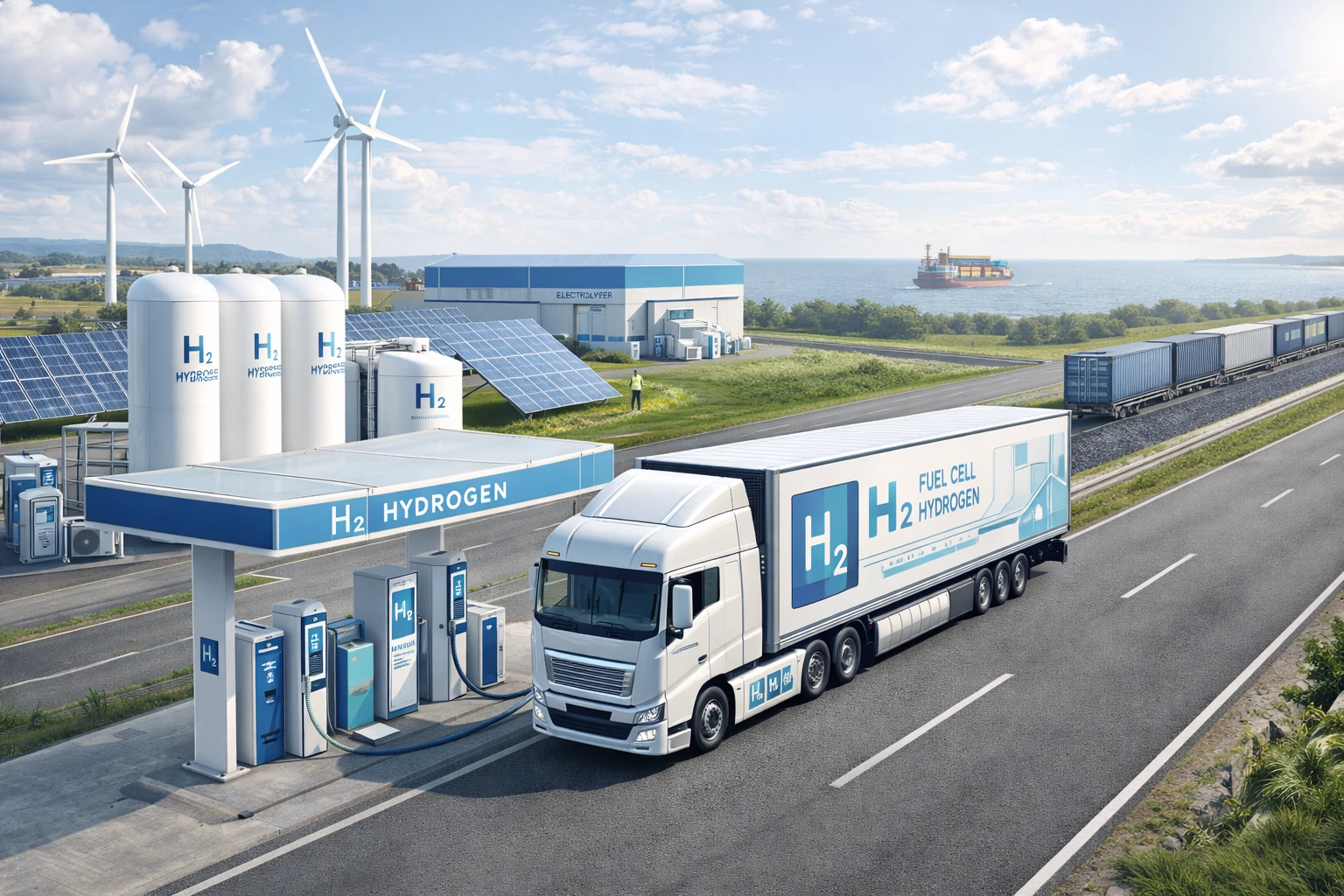
This is where things get interesting for Canada. Think about our trucking routes. Driving a load from Montreal to Calgary is a massive trek. If you used an electric truck, you’d need a battery the size of a small apartment, and you’d lose half your cargo space just to carry the power source. Plus, you’d be sitting at a charging station for hours.
Hydrogen trucks solve the “weight and wait” problem. They fuel up in about 15 minutes, just like diesel, and they can go for nearly 1,000 kilometers without stopping. Companies like Nikola and Hyundai are already testing these rigs on actual roads. Sure, there aren’t many hydrogen stations yet, but the tech is solid. It’s the infrastructure that’s playing catch-up.
And it’s not just about the trucks. Think about construction equipment or mining rigs in Northern Ontario. Those machines need massive torque and they run 24/7. You can’t stop a multi-million dollar mining operation because a battery died. Hydrogen fuel cells keep them moving without the thick black smoke.
Current Challenges in the Trucking Industry
-
- Lack of a nationwide refueling network (we need “Hydrogen Corridors”).
The high cost of fuel cells compared to traditional internal combustion engines.
-
- Storage issues, as hydrogen gas takes up a lot of room even when compressed.
Ships and Planes: The Final Frontier
If you think trucks are a challenge, look at the shipping industry. Those giant container ships use “bunker fuel,” which is basically the sludge left over at the bottom of the oil barrel. It’s incredibly dirty. One large ship can produce as much sulfur as millions of cars. Switching these to green ammonia (made from green hydrogen) would be a massive win for the oceans.
Then there’s flying. We all love a vacation, but “flight shame” is real. Aviation is one of the hardest sectors to clean up. Small electric planes exist for short hops, like maybe Vancouver to Victoria, but for a cross-Atlantic flight? Hydrogen is the only contender. Airbus is already working on “ZEROe” concepts-planes that burn liquid hydrogen. They hope to have them in the sky by 2035. Imagine flying to London and knowing the only thing your plane left behind was a cloud of mist.
But wait, is it safe? We’ve all heard of the Hindenburg. Honestly, that’s like judging modern cars based on a Model T crash. We’ve been handling industrial hydrogen for decades. It’s different from gas, sure-it’s lighter than air and leaks easily-but with modern sensors and carbon-fiber tanks, it’s arguably safer than the gasoline sloshing around under your seat right now.
What’s the Hold Up?
You’re probably wondering: if it’s so great, why aren’t we all driving hydrogen cars? Well, remember the “H” word? Cost. Making green hydrogen is still pricey because electrolyzers are expensive and we need way more renewable energy than we currently have. It’s a bit of a “chicken and egg” situation. No one buys the trucks because there are no stations, and no one builds the stations because there are no trucks.
But governments are stepping in to break the cycle. In Canada, we’ve got the Hydrogen Strategy for Canada, which aims to make us a global leader. We are seeing hubs pop up in places like Edmonton and the Atlantic provinces. They aren’t just looking at local use; they want to ship this stuff to Germany and Japan.
The Economics of the Hydrogen Shift
Let’s look at how much this might cost over the next decade. Analysts expect a “tipping point” where hydrogen becomes cheaper than diesel. Here is a projection based on current energy trends:
| Year | Estimated Cost ($/kg) | Main Drivers of Cost Reduction |
|---|---|---|
| 2024 | $6.00 – $8.00 | Early pilot projects, limited scale |
| 2030 | $3.00 – $4.00 | Mass production of electrolyzers |
| 2040 | $1.50 – $2.00 | Cheap, abundant wind and solar power |
Once we hit that $2 mark, it’s game over for fossil fuels in heavy transport. At that price, even the most skeptical fleet manager will make the switch because it just makes financial sense. It won’t even be about being “green” anymore; it’ll be about the bottom line.
How Canada Can Win the Race
We have a massive advantage. Our grid is already quite clean compared to many other countries, thanks to all that hydro-electricity in Quebec, BC, and Manitoba. We also have the engineers and the space. While Europe is struggling to find enough land for massive wind farms, we’ve got room to spare.
There is also the “Blue Hydrogen” bridge. Some folks argue we should use our natural gas reserves and just capture the carbon (Blue Hydrogen) while we wait for Green tech to get cheaper. It’s a controversial take, but it might be a necessary step to get the infrastructure built quickly. Whether we go full green right away or take a blue detour, the destination is the same: a world where transport doesn’t poison the air.
Key Hydrogen Hubs in Canada
- The Edmonton Region: Focusing on heavy-duty trucking and industrial use.
- Atlantic Canada: Leveraging offshore wind to export hydrogen to Europe.
- British Columbia: Already a leader in fuel cell tech (thanks to companies like Ballard Power).
Honestly, it’s an exciting time to be watching this space. We’re moving past the “maybe one day” phase and into the “how do we build this now” phase. It’s not going to happen overnight-nothing this big ever does-but the momentum is undeniable. Just look at the investments coming from the big rail companies. Canadian Pacific (CPKC) is already testing hydrogen-powered locomotives. If you can move a mile-long train with hydrogen, you can move pretty much anything.
The Human Side of the Energy Shift
We often talk about “decarbonization” like it’s just a math problem. But it’s really about people. It’s about the truck driver who doesn’t have to breathe in diesel fumes all day. It’s about the communities near ports that have higher rates of asthma because of ship emissions. Switching to green hydrogen isn’t just a corporate move; it’s a public health move.
Is it perfect? No. Is it the only solution? Probably not. We’ll still need batteries for cars and heat pumps for houses. But for the heavy lifting-the stuff that keeps global trade moving-hydrogen is the MVP. It’s the missing piece of the puzzle that makes a carbon-free future actually look possible, not just like a nice idea in a brochure.
So, the next time you see a weird-looking truck with a “Zero Emission” sticker on the side, take a closer look. It might just be running on the most abundant element in the universe. And honestly? That’s pretty cool.
Common Questions About Green Hydrogen
How much does it cost to fill up a hydrogen car?
Right now, it’s pricey-usually more than gas. But since hydrogen is more efficient than petrol, you get more mileage out of every “liter” or kilogram of fuel. Prices are expected to drop big time as more stations open up.
Is green hydrogen flammable?
You bet it is, just like gasoline or propane. But it’s actually safer in some ways because it’s so light. If there’s a leak, it shoots up into the atmosphere instead of pooling on the ground like a puddle of gas.
Can I convert my current car to run on hydrogen?
Technically? Maybe. Practically? Not really. Hydrogen needs specialized tanks and fuel cells. It’s way better to just buy a vehicle designed for it from the ground up, like the Toyota Mirai or Hyundai Nexo.
Why not just use batteries for everything?
Energy density is the main culprit. Batteries are heavy and take a long time to charge. For a city car, they’re perfect. For a 40-ton truck or a plane, they just don’t have the “oomph” needed for long distances.
Does Canada actually produce green hydrogen yet?
We’re getting there! There are several small-scale plants operating, and massive ones are being built in places like Newfoundland and Quebec. We are currently in the “scaling up” phase of the industry.
Will hydrogen make my electricity bill go up?
It shouldn’t. In fact, hydrogen can help stabilize the grid. We can make hydrogen when the wind is blowing and there’s “extra” power, then use it later when things are calm. It’s like a giant battery for the whole country.
What’s the difference between a fuel cell and burning hydrogen?
Burning it works like a normal engine but produces some NOx (nitrogen oxides). A fuel cell is a chemical reaction that makes electricity directly from the gas. It’s way cleaner and more efficient, so that’s where the tech is heading.
Wrapping It Up
The journey to green hydrogen isn’t going to be a straight line. There will be setbacks, budget overruns, and plenty of “I told you so’s” from the skeptics. But when you look at the sheer scale of the climate challenge, we need every tool in the shed. Hydrogen is a big, shiny, carbon-free hammer. It’s the only thing we have that’s tough enough to take on the heavy-duty industries that batteries simply can’t touch. For a country like Canada, this isn’t just an environmental choice-it’s a massive economic opportunity. We have the resources, we have the talent, and now, we finally have the motivation to make it happen. It’s going to be a wild ride, but seeing a cleaner horizon is worth the effort.
What do you think? Would you feel comfortable flying in a hydrogen-powered plane, or are you sticking to the ground until the tech is “proven”? It’s a conversation worth having, because the future is arriving a lot faster than we think.