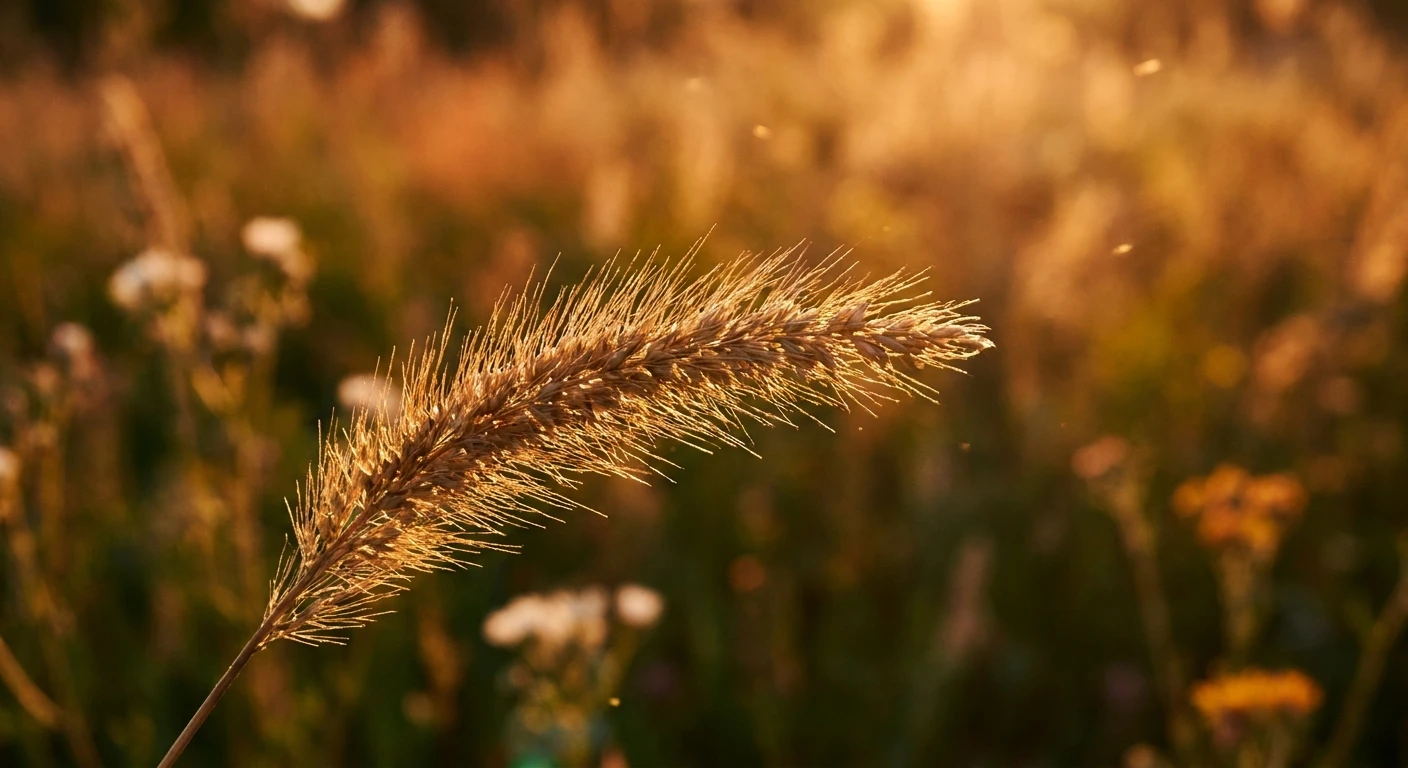
Understanding Foxtail Grass: The Ultimate Guide
When you walk your dog through a sunlit field, the last thing on your mind is the hidden danger of foxtail grass lurking in the dry brush. These seemingly innocuous plants, named for their bushy, animal-like seed heads, sway beautifully in the breeze during early spring. However, as the weather warms and the green stalks turn a brittle brown, they transform into a severe hazard for domestic animals and a stubborn nuisance for landowners.
The deception lies in the plant’s delicate appearance. You might walk past patches of it along sidewalks, hiking trails, or even the edges of your own lawn without a second glance. Yet, those bristly clusters are biologically engineered to detach easily and latch onto anything that brushes past them. Whether it is the fur of a passing animal, the laces of your hiking boots, or the fabric of your outdoor gear, the seeds hitch a ride, entirely unnoticed until the damage is already done.
Read also: Nipah virus Canada: Risks and Readiness Protocols; What Causes a Dent in Head? Facts and Next Steps.
While these grassy weeds look harmless and beautiful from a distance, their barbed seed heads pose severe, sometimes life-threatening risks to domestic pets and disrupt native ecosystems. Accurate identification, proactive yard management, and a solid understanding of how these plants operate remain absolutely essential for anyone spending time outdoors with their animals. By educating yourself on the life cycle and mechanical properties of this widespread weed, you can prevent immense suffering for your pets and maintain a safer, healthier landscape.
Core Hazards and Ecosystem Impact
The danger of this plant does not come from toxic chemicals or poisonous sap, but rather from pure mechanical design. The seed heads contain clusters of spikelets equipped with microscopic, backward-facing barbs. Once a seed embeds itself into a surface, these barbs act exactly like a fishhook. They allow the seed to move strictly in a forward direction, preventing it from falling out or being easily pulled backward. When this happens to a living creature, the seed continuously burrows deeper with every muscle movement the animal makes, creating a dangerous pathway of infection and tissue damage.
| Plant Feature | Identifying Trait | Risk Level to Pets |
|---|---|---|
| Seed Heads (Awns) | Bristly, bushy clusters resembling an animal’s tail. | Extremely High (Embeds into tissue) |
| Stems | Hairless, jointed, typically drying out rapidly in summer. | Low (Mostly a tripping or slipping hazard when wet) |
| Leaves | Flat, elongated blades with minimal texture. | Low (Harmless unless heavily ingested) |
Understanding the value of proactive weed management provides immediate, tangible benefits. First, it saves pet owners thousands of dollars in emergency veterinary bills; surgical removal of deeply embedded seeds often requires general anesthesia and specialized ultrasound equipment. Second, for agricultural managers, clearing these weeds protects livestock from mouth abrasions and eye injuries, thereby securing the commercial value and health of the herd. Knowing how these seeds operate is your first line of defense.
The biological journey of an embedded seed typically follows a specific, destructive pathway:
- Attachment: The brittle stalk breaks upon contact, and the seed clings tightly to passing fur, clothing, or skin.
- Penetration: As the animal moves, grooms, or scratches, the sharp tip of the awn pierces the outer dermal layer, slipping beneath the skin or entering an orifice.
- Migration: Driven by the retrograde barbs, the seed travels continuously forward through muscle, fat, and sometimes into vital organs, leaving a hollow tract of bacteria and necrotic tissue behind it.
Origins of the Species
To truly grasp why this plant behaves the way it does, we need to look at its botanical origins. The term itself is a common name applied to several distinct species of grasses across multiple genera, most notably Alopecurus, Setaria, and Hordeum. Many of these species are native to the temperate regions of Eurasia and North America. Originally, they occupied specific ecological niches, thriving in seasonal wetlands, natural prairies, and transitional zones where soil moisture fluctuated heavily between spring and summer.
In their native, undisturbed habitats, these grasses played a standard role in the ecosystem. They provided foraging material for grazing wildlife during their green phase and contributed to soil stabilization. However, as human civilization expanded, agricultural practices and land development altered the landscape. The aggressive, highly adaptable nature of these plants allowed them to quickly exploit disturbed earth, moving from isolated patches of wilderness into direct competition with cultivated crops and domesticated animals.
Evolution of the Barbed Seed
The fearsome mechanical design of the seed head is a masterclass in evolutionary adaptation. For a stationary plant to ensure the survival and geographic spread of its offspring, it relies on external forces like wind, water, or animals. The backward-facing barbs evolved specifically for zoochory—seed dispersal via animals. By snagging onto the thick coats of migrating mammals, a single plant could distribute its genetic material across dozens of miles.
Over millennia, the seeds that possessed the sharpest tips and the most resilient barbs survived at higher rates. The plant did not evolve with the intent to harm; the deeply embedding nature of the awn is simply a highly effective byproduct of ensuring the seed stays attached to a host long enough to be carried to a new, fertile location. Unfortunately for modern, thin-skinned domestic pets, this ancient evolutionary trait translates directly into severe medical emergencies.
Modern State and Global Spread
Today, these grasses are categorized as widespread invasive weeds in many parts of the world, particularly across the western United States, southern Europe, and parts of Australia. They flourish in disturbed soils—areas where construction, overgrazing, or drought have eliminated native competitor plants. You will frequently find them dominating roadside ditches, vacant urban lots, and poorly maintained pastures.
The modern climate also plays a role in their proliferation. With increasingly unpredictable weather patterns, rapid spring rains followed by intense, dry summers create the perfect life cycle for the weed. They grow aggressively when water is present, then rapidly dry out, creating billions of brittle, detached seed heads right at the peak of summer outdoor recreation season. This global spread requires vigilance from municipalities, farmers, and everyday homeowners alike.
The Anatomy of an Awn
When viewed under a microscope, the anatomy of the awn reveals exactly why it is so dangerous. The structure is composed of tightly packed, rigid cellulose fibers that taper to a needle-like point. Along the sides of this primary shaft are the trichomes—the tiny, stiff hairs that point backward. These trichomes are remarkably strong and flexible, capable of bending to slide into a tight space but locking firmly against the surrounding tissue to prevent backward movement.
This anatomical structure essentially functions as a biological ratchet. Every time a dog takes a breath, flexes a muscle, or shakes its head, the surrounding tissue compresses and relaxes against the seed. The barbs catch the tissue on the relaxing phase, pulling the seed a fraction of a millimeter deeper. Because the outer casing of the seed is highly resistant to moisture and enzymatic breakdown, the mammalian body cannot simply dissolve the foreign object.
Biological Impact on Mammalian Tissue
When a foreign object enters a mammalian body, the immune system triggers a massive inflammatory response. White blood cells rush to the area to break down the invader, a process known as phagocytosis. However, because the plant material is heavily lignified and resistant to animal enzymes, the immune system fails to destroy it. Instead, the body attempts to wall off the invader, resulting in painful swelling, fluid buildup, and abscess formation.
- Bacterial Carriage: The rough surface of the seed carries millions of soil-dwelling bacteria straight into the sterile internal environment of the animal’s tissue.
- Chronic Tract Formation: As the seed migrates, it leaves behind a hollow, infected tunnel known as a draining tract, which will continuously ooze fluid until the physical seed is removed.
- Organ Puncture Risk: If a seed is inhaled through the nose, it can migrate through the respiratory tract, potentially causing collapsed lungs or severe pleural infections.
- Tensile Strength: The cellulose structure maintains its rigidity even when soaked in bodily fluids for months, making natural breakdown impossible.
Identifying High-Risk Areas
To protect yourself and your animals, you must first know exactly where to look. These weeds do not typically thrive in heavily shaded, well-watered, and manicured environments. Instead, they seek out the margins. Look for them along fence lines, the edges of concrete sidewalks, hiking trail borders, and any patch of dirt that has been recently dug up or disturbed. During the spring, they look like tall, harmless green grass, but by mid-summer, they turn yellow or pale brown. Knowing the terrain of your daily walking route allows you to steer clear of the most heavily infested zones.
Yard Management and Eradication
Taking control of your own property is the most effective way to eliminate the risk. Mowing is often counterproductive once the plant has dried out, as the mower blades simply chop up the stalks and scatter the dangerous seeds directly onto the lawn surface. Instead, eradication requires pulling the plants up by their roots while they are still green and pliable. If the plants have already dried, carefully bagging them by hand—while wearing thick leather gloves—is necessary. Applying a pre-emergent herbicide in early spring can also prevent the seeds from germinating in the first place, breaking the plant’s life cycle for the season.
Post-Walk Pet Inspection Routine
Consistency is your best tool for early detection. After every walk through tall grass or brush, establish a mandatory physical inspection of your pet. Start with the paws, carefully spreading the toes to look deep into the interdigital spaces, as this is the most common entry point. Next, check the ears, feeling along the base of the ear flap for any sudden sensitivity. Run your hands through their armpits, along their belly, and visually inspect their gums and nostrils. Catching a seed while it is merely tangled in the fur prevents the agonizing and expensive medical process of tracking it down once it has pierced the skin.
Safe Alternatives for Landscaping
If you are rehabilitating a yard or pasture, outcompeting the invasive weeds with native, safe plants is a highly effective long-term strategy. Native bunchgrasses, creeping fescues, and broadleaf ground covers establish deep root systems that deprive invasive weeds of the water and nutrients they need to sprout. Consult with a local native plant nursery to select species that match your specific soil pH and climate. By cultivating a dense, healthy lawn or pasture, you leave no bare dirt for the dangerous weed seeds to exploit.
Myths & Reality
Myth: These weeds only grow in wild, unmanaged pastures far away from the city.
Reality: They are highly adaptable and frequently sprout in urban sidewalks, backyard lawns, cracks in the pavement, and local dog parks.
Myth: You can easily pull a seed out of a dog’s ear at home with tweezers.
Reality: The microscopic barbs anchor firmly into delicate tissue; attempting to pull it out often breaks the fragile awn, leaving the barbed tip deep inside the ear canal, which requires a veterinarian to remove safely.
Myth: The plant is dangerous year-round, so you must always avoid grassy areas.
Reality: The primary mechanical danger occurs specifically during late spring, summer, and early fall when the seed heads dry out, become brittle, and detach easily from the stalk.
Myth: Weed wacking is the best and fastest way to get rid of them in your yard.
Reality: Trimming dried plants with a string trimmer scatters the dangerous seeds uncontrollably across your lawn; pulling them by the roots or carefully bagging them is the only safe removal method.
What exactly is a foxtail?
It is a broad common name for several species of grasses that produce a cluster of barbed seeds at the top of their stalks, resembling the bushy tail of a fox. They are known for their ability to burrow into soil—and animal tissue.
Are these plants poisonous if eaten?
No, the danger they present is entirely mechanical, not chemical. They do not contain toxins, but if swallowed, the barbs can severely damage the throat, tonsils, and gastrointestinal tract of an animal.
Do they affect cats as well as dogs?
Yes, cats can certainly fall victim to them. However, dogs are far more commonly affected because of their enthusiastic behavior—running through tall brush, sniffing the ground aggressively, and panting heavily.
Can the seeds travel through the bloodstream?
They do not travel through blood vessels. Instead, they migrate directly through muscle, fat, and connective tissue, driven forward by the animal’s natural movements, occasionally reaching internal organs.
Is it safe to burn them to clear a field?
Controlled agricultural burning is highly effective at destroying the seeds, but you must strictly adhere to local fire regulations and air quality ordinances, as dry brush fires can easily spiral out of control.
Will standard weed killers work on them?
Broad-spectrum herbicides will kill the green plant, but they do nothing to destroy a seed that has already formed and dried. Pre-emergent treatments applied to the soil before spring are a much better defense.
How do I know if my dog has an embedded seed?
Watch for sudden, frantic behavior. Uncontrollable sneezing, violent head shaking, constant licking of a single paw, or a sudden, weeping swelling on the skin are all major red flags requiring immediate veterinary attention.
Conclusion
The threat posed by foxtail grass is a perfect storm of evolutionary biology clashing with modern domestic life. What serves as a brilliant survival mechanism for a wild plant translates into a painful, costly nightmare for pets and their owners. By understanding the life cycle of the weed, identifying the danger zones in your environment, and maintaining a strict grooming and yard-care routine, you can completely mitigate these risks. Do not wait for a medical emergency to strike. Take action today: inspect your property, adjust your landscaping practices, and always check your furry friends after a long summer walk to ensure they remain safe, healthy, and happy.